Foreword by Virginia Postrel
Edited by Donald J. Boudreaux and Aeon J. Skoble
This series of essays, written by leading scholars in the United States, Canada and Europe, explores the lives and ideas of some of the most influential women over the past few centuries whose work contributed enormously to the democratic, prosperous and free societies that many people enjoy today. They are a remarkably diverse group of women. Their lives span the eighteenth to twenty-first centuries and their contributions are significant despite the barriers each faced. Some were educated at prestigious universities while others only had informal schooling. Some were academics, others writers and journalists, and still others activists. What they had in common was an understanding of the power of freedom and liberty, and their influential advocacy of such during their lives. These essays are a celebration and recognition of their lives and contributions.
The work introduced in these essays exemplifies numerous strands of thought within the classical liberal tradition, from feminism and abolitionism to the Chicago School of economics. These thinkers include some of the most significant figures in the development of mid-twentieth-century American libertarianism, with its emphasis on the autonomous individual, alongside some of the most influential analysts of how social interaction brings forth order without top-down design.
Some of these writers emphasize empiricism, others theory. Addressing why the West grew rich, one has written a three-volume history informed by literature, culture, and massive amounts of data. Another developed the metaphor of mechanical energy to argue for the freedom of creative individuals. One blamed the Great Depression on contractionary monetary policy, another on Americans “declining resilience” in the face of hardship.
Why put such a heterogeneous group in the same volume?
The obvious answer is that they are women. They are not the norm for scholars or public intellectuals or, for most of history, thinking human beings. However dissimilar their work may be, they seem to belong together. Anna Schwartz’s data-rich monetary economics may appear to have little in common with Ayn Rand’s popular novels, but their differences are overwhelmed by the social conditions of gender.
It is no accident that there are more journalists here than professors. Since the eighteenth century, commercial publishing has been more open to women writers—and their readers—than universities have been to female students or scholars.
Publishing also rewards generalists while academia largely deters them. The description of Jane Jacobs as “an amateur in the professional’s den” could apply to many of these figures. Schwartz’s intense specialization is the exception, Rand’s autodidacticism the rule. Even within the academy, Elinor Ostrom and Deirdre McCloskey represent cross-disciplinary researchers, with Ostrom achieving the highest honors in both political science and economics and McCloskey holding simultaneous appointments in economics, history, and English.
For all its practical disadvantages, there is something intellectually liberating about being an outsider. If you don’t belong, you are free to think in fresh categories. When Jacobs declared that there is “no virtue in confirming to the dominant opinion of the moment” and that “progress has been largely owing to the opportunity for experimentation,” she could have been speaking for all these thinkers—and for classical liberalism as a whole. These convictions represent both liberal principles and liberal methodology, both philosophy and culture.
The same is true of Isabel Paterson’s declaration that “It’s expensive, but I like to own myself.” As an abstract concept, self-ownership underlies some versions of libertarian political theory. But Paterson’s expression seems more practical, rooted in the historical experience of women. The ability to earn and control one’s own money, long denied to women, entails the ability to control one’s own life. Without economic independence, individual autonomy and intellectual integrity are difficult to maintain. As Sylvana Tomaselli writes, reflecting on Mary Wollstonecraft’s thought, “To be financially dependent was to be liable to be corrupted, to be unable to think for oneself, and thus to cease being one’s own person. She wanted all men and women to be freed from such dependence.” The resolutely independent David Hume, excluded from university posts by his unflinching religious skepticism, would have understood.
As Keeper of the Advocates Library in Edinburgh, however, Hume enjoyed the kind of research-friendly job denied to most of these female scribblers. To pay their bills, Mary Wollstonecraft, Isabel Paterson, Rose Wilder Lane, and Jane Jacobs ground out forgettable, and largely forgotten, articles and stories along with their political writings. (Rand’s bestselling novels funded her philosophical enterprises and a grant from the Rockefeller Foundation allowed Jacobs to escape constant deadlines to write her classic The Death and Life of Great American Cities.) Famous and intellectually well-connected in her day, Harriet Martineau wrote didactic fables for a mass audience and thousands of newspaper columns. Although influential in Victorian Britain, her work was ephemeral and is today known only to specialists. She enjoyed financial independence and a public voice, but not the liberty to craft enduring work.
Given greater academic opportunities and the discipline of scholarly interactions, might such thinkers have developed deeper explications of their ideas? Would Lane have completed her magnum opus The Discovery of Liberty rather than writing a popular book on needlework? Would Paterson have exercised broader influence through her writing rather than primarily through her immediate circle of admirers? Perhaps. But it’s likely what these women left behind was shaped as much by their restless personalities as by their social circumstances. The choices they made were driven not just by necessity but by an eclectic curiosity. That curiosity was well-suited to journalism, ephemeral though its products might be, and it fed their more ambitious works as well. In a world of highly specialized thought, they preserved the tradition of classical liberal interest in wide-ranging questions exemplified by Scottish Enlightenment thinkers like Hume and Adam Smith.
The diversity of its subjects makes this volume a particularly good introduction to themes within classical liberalism. Driven by curiosity, passion, and love (the root of both amateur and philosophy), the thinkers represented here illustrate both the breadth of the classical liberal tradition and its enduring appeal to independent minds.
Listen In

Jane Jacobs—Community impact and why it’s a key metric
Lydia Miljan, Professor of Political Science at the University of Windsor, joins host Rosemarie Fike to discuss Jane Jacobs’ unconventional road to economic thinking through community activism and urbanism—and why assessing the needs of communities within cities remains vital for effective, non-disruptive urban planning/design. They even get into the various ways community, big or small scale, combats isolation.
- Follow or Subscribe:






Rose Friedman and Mary Paley Marshall—Neck(s) of the Operation
Lynne Kiesling, co-author of the Essential Women of Liberty, joins host Rosemarie Fike to discuss the critical behind-the-scenes work done by Rose Friedman and Mary Paley Marshall—two women who, despite not having very public-facing roles when it came to their respective husbands' careers, both collaborated with and made invaluable contributions to not only the work of their partners, but the field of economics entire.
- Follow or Subscribe:
Elinor Ostrom and the Bottom-Up Approach to Community Maintenance
Dr. Jayme Lemke, Senior Fellow at George Mason University’s Mercatus Center, and host Rosemarie Fike discuss Nobel Prize winning economist Elinor Ostrom and why community is best served and best empowered through grassroots movements that enable solutions tailored to their specific needs.
- Follow or Subscribe:
Watch the Videos
Essential Women of Liberty
Elinor Ostrom
Deirdre McCloskey
Jane Jacobs
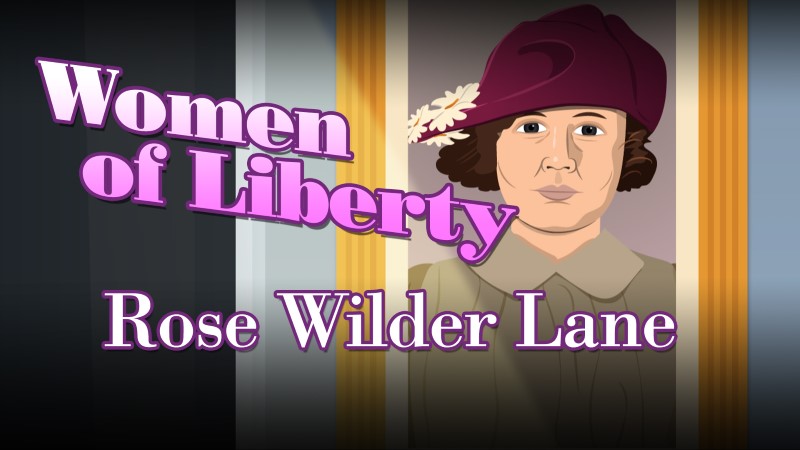
Rose Wilder Lane
Download the Book
Get a digital copy of the book. Choose the version you prefer below.
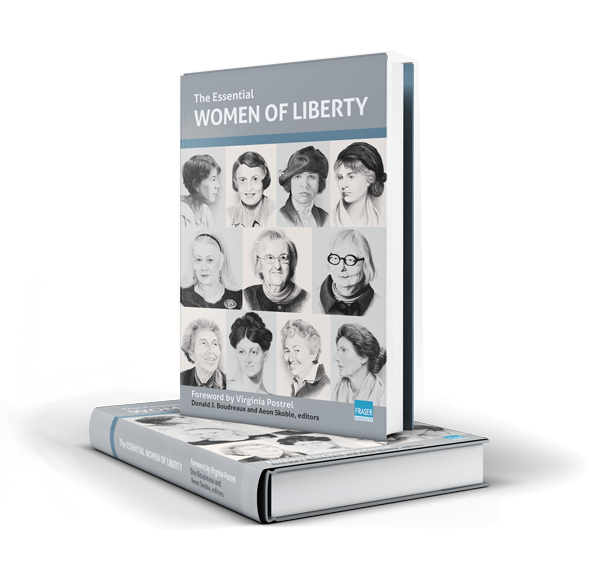




Explore the Book
Chapter by chapter summary of the book.
-
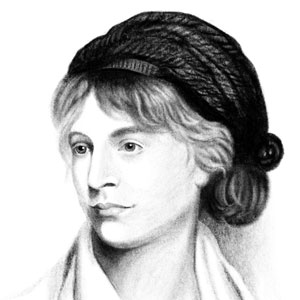
Chapter 1
Mary Wollstonecraft (1759–1797)
Mary Wollstonecraft is one of the essential contributors to conceptions and discussions of liberty. Influential since the publication of her Vindication of the Rights of Woman in 1792, she was and continues to be read and cited both within and beyond the English-speaking world (Botting, Wilkerson, and Kozlow, 2014). Frequently seen as the first English feminist, her philosophy is receiving increasing attention, thereby placing her views on the rights of women in the wider context of her economic, social, and political views. Most important in relation to the subject of her reflections on liberty is the close link she maintained between rights and duties, and her insistence that artificial hindrances to the development of all human beings violated natural law and divine justice. Liberty, for Wollstonecraft, had to be enjoyed by all, regardless of gender and race; it was her belief that gross inequality was incompatible with the well-being not just of the unprivileged, but also of the privileged.
-
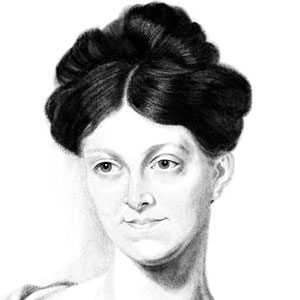
Chapter 2
Harriet Martineau (1802–1876)
Harriet Martineau was perhaps the greatest storyteller in the long tradition of liberal political economists. There is an engaging simplicity in her stories, told to educate the general public about basic principles of economics, the benefits associated with the division of labour and free trade, as well as alternatives to a nineteenth century system of enslavement in the US South. Her monthly serials, published under the umbrella title Illustrations of Political Economy, eventually brought her enormous celebrity and much-needed financial independence.
-
Chapter 3
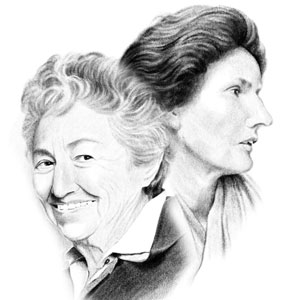
Mary Paley Marshall (1850–1944) and Rose Director Friedman (1910–2009)
With fewer academic and career opportunities than in the present, women in the past often found outlets for their scholarly and intellectual pursuits by collaborating with their husbands, sometimes while also raising families. That reality is reflected in the economics profession as well. This chapter highlights the intellectual contributions of two women who were economists in their own rights but who also married well-known and influential economists with whom they collaborated: Mary Paley Marshall and Rose Director Friedman. The nature of the collaborative intellectual relationships differed in the two cases in ways that reflect both the personal and cultural characteristics of each.
-
Chapter 4
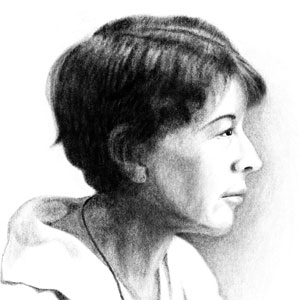
Isabel Paterson (1886–1961)
Isabel Paterson lived an extraordinary life. She was vivacious and independent. She was witty, insightful, and stylish. She was a woman of unwavering principle and was sometimes acerbic and curmudgeonly. She had a compendious memory, a towering intellect, and was extremely well read. She was a force of reason against misguided collectivist ideas and a vocal public advocate for the individual and for capitalism through her books, articles, columns, informal literary salons, and letter exchanges. You would be hard pressed to find a more influential thinker in the modern individualist movement.
-
Chapter 5
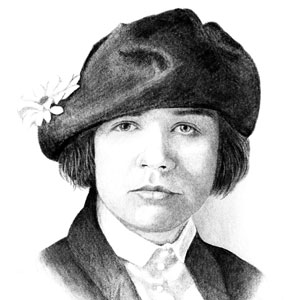
Rose Wilder Lane (1886–1968)
Rose Wilder Lane based her analysis of human liberty on her experiences and observations across the United States—and across the globe. In 1943, her always adventurous life took an unexpected turn. Not only did she publish The Discovery of Freedom: Man’s Struggle Against Authority that year, but she also took on the Social Security system, the US Post Office, and the FBI.
-
Chapter 6
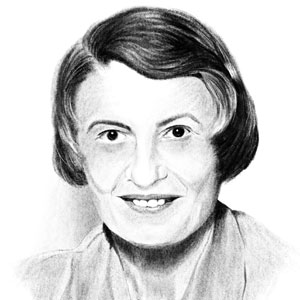
Ayn Rand (1905–1982)
Born Alisa Rosenbaum on February 2, 1905, in St. Petersburg, Russia, Ayn Rand would go on to become one of the most famous and polarizing defenders of liberty to wield a pen. Enamored with stories featuring swashbuckling heroes, French literature, and American film, Rand knew from a young age that she wanted to be a writer. Her aim was to depict the ideal man with an uncompromising heroic vision. To achieve this, Rand worked out over many years a philosophical system she would later call Objectivism.
-
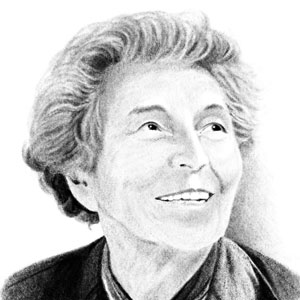
Chapter 7
Anna J. Schwartz (1915–2012)
Today it is commonly recognized that a country’s central bank and the money supply have a significant impact on inflation and economic activity. Indeed, whether in research or academic circles, in the financial industry, or in popular press, no one can utter the words “recession” or “inflation” without discussing the actions of the US Federal Reserve. This was not always the case. Prior to the 1960s, few people acknowledged that the money supply and a central bank’s actions governing it matter for economic activity and prices.
-
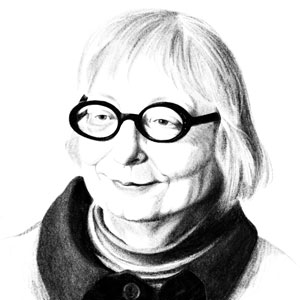
Chapter 8
Jane Jacobs (1916–2006)
Jane Jacobs is best known for her books about cities. Since the Covid-19 pandemic, some people have speculated about the future of cities. With learning, working, and entertainment all being conducted in virtual spaces, are there still sufficient reasons to organize ourselves in places called cities?
-
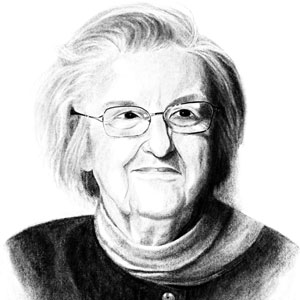
Chapter 9
Elinor Ostrom (1933–2012)
Elinor Ostrom was a scholar, citizen, and academic entrepreneur of exceptional insight and determination. Her research on democratic self-governance strongly influenced the emerging sub-fields of public choice and institutional economics, established an important new framework for the analysis of common pool resources and collective action problems, and helped to build bridges between otherwise unconnected bodies of research. For these contributions, Ostrom was awarded both the highest honor in political science and the highest honor in economics.
-
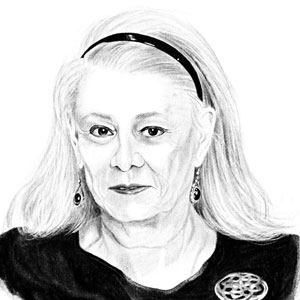
Chapter 10
Deirdre McCloskey (1942– )
Economists are not generally known as iconoclasts. Ask most people to imagine an economist and they envision a nerdy white man in a blue suit talking about interest rates. Deirdre McCloskey breaks that stereotype in several dimensions, describing herself as a “literary, quantitative, postmodern, freemarket, progressive-Episcopalian, ex-Marxist, Midwestern woman from Boston who was once a man. Not ‘conservative’! I’m a Christian classical liberal.” Born in 1942 as Donald, the son of a professor, McCloskey famously undertook gender reassignment at age 56, writing a beautiful and eloquent memoir about her decision and the process (McCloskey, 1999) and staking out a professional path to make economics more humane (McCloskey, 2020).
About the Author

Carri Ann Biondi
Carrie-Ann Biondi is an adolescent program manager and coach at Higher Ground Education and a humanities guide at Academy of Thought and Industry. She taught a wide range of philosophy courses at the college level for 25 years, most recently at Marymount Manhattan College, NY. Her research and publications focus on ancient philosophy, the philosophy of education, and popular culture and philosophy. She has a BA in American studies from Hofstra University, an MA in American culture studies from Bowling Green State University, and both an MA and a PhD in philosophy from Bowling Green State University.

Dedra McDonald Birzer
Dedra McDonald Birzer is a lecturer of history at Hillsdale College in Michigan, and the editor-in-chief and director of the South Dakota Historical Society Press. She is currently writing an intellectual biography of Rose Wilder Lane and has published essays in the Ignatius Critical Editions of Uncle Tom’s Cabin, Jane Eyre, and Wuthering Heights. She completed her doctorate in history at the University of New Mexico in 2000.
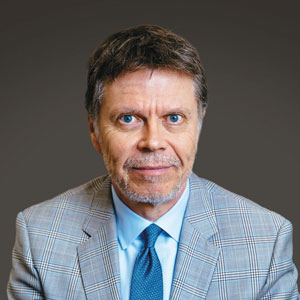
Donald J. Boudreaux
Donald J. Boudreaux is a professor of economics and former Economics Department chair at George Mason University and a Fraser Institute senior fellow. He is also a senior fellow with the F.A. Hayek Program for Advanced Study in Philosophy, Politics, and Economics at the Mercatus Center at George Mason University, and holds the Martha and Nelson Getchell Chair for the Study of Free Market Capitalism at the Mercatus Center. He has a PhD in economics from Auburn University in Alabama and a law degree from the University of Virginia.
Professor Boudreaux has lectured across the United States, Canada, Latin America, and Europe on a wide variety of topics, including the nature of law, antitrust law and economics, and international trade. He is published in a variety of newspapers and journals, including The Wall Street Journal, The Washington Times, and The Supreme Court Economic Review and writes a blog (with Russell Roberts) called Café Hayek, cafehayek.com.

Andrew G. Humphries
Andrew G. Humphries is a Postdoctoral Fellow at Arizona State University in the School of Civic and Economic Thought and Leadership. He earned his PhD in Economics from George Mason University, his M.Ed. in Montessori Integrative Learning from Endicott College, and his BA in Liberal Arts from St. John’s College. He previously worked as an educator in the United States, India, and Guatemala. He is most interested in the history of economic thought, liberal education, self-government, and Socratic pedagogy.

Rachel Davison Humphries
Rachel Davison Humphries is director of outreach at the Bill of Rights Institute in Arlington, Virginia, where she currently leads innovation, partnerships, and programming. She earned her BA in Liberal Arts from St. Johns College in Santa Fe, New Mexico, and Annapolis, Maryland, and her Masters in Learning, Design & Technology at Georgetown University in Washington, DC.

L. Lynne Kiesling
L. Lynne Kiesling is a research professor and co-director of the Institute for Regulatory Law & Economics in the College of Engineering, Design and Computing at the University of Colorado–Denver. She received a BS in Economics from Miami University (Ohio) and a PhD in Economics from Northwestern University.

Jayme Lemke
Jayme Lemke is a senior research fellow at the Mercatus Center at George Mason University and a senior fellow in the F.A. Hayek Program for Advanced Study in Philosophy, Politics, and Economics. In addition to her work on the evolution of women’s economic rights and opportunities in United States history, she has written on public choice and institutional theory as applied to policing, higher education, and other local public services. Her PhD in Economics is from George Mason University.
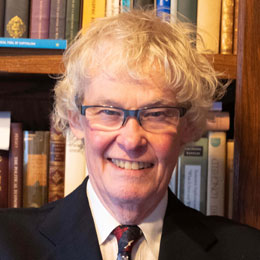
David M. Levy
David M. Levy is professor of economics at George Mason University and a distinguished fellow of the History of Economics Society. Levy has written seven scholarly books, over 100 journal articles, and dozens of academic books reviews and chapters in scholarly publications. He received his PhD in economics from the University of Chicago, studying under Nobel laureate George Stigler.

Lydia Miljan
Lydia Miljan is professor of political science at the University of Windsor, and a Fraser Institute senior fellow. Her main research interests include how journalists’ personal views are reflected in news content and public opinion formation. In addition to peer-reviewed papers, she is the author of three books: Public Policy in Canada, Hidden Agendas: How Journalists Influence the News, and Cross-Media Ownership and Democratic Practice in Canada. She holds a PhD in Political Science from the University of Calgary.

Liya Palagashvili
Liya Palagashvili is a senior research fellow at the Mercatus Center at George Mason University in Arlington, Virginia, and a research fellow at New York University School of Law. She has published in academic journals, books, and in major media outlets such as the New York Times and Wall Street Journal. Her research is in law and economics, political economy, and entrepreneurship. She earned her PhD in Economics from George Mason University in 2015.
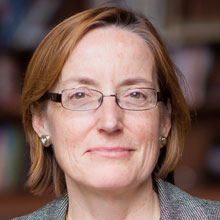
Sandra J. Peart
Sandra J. Peart is dean and the E. Claiborne Robins Distinguished Professor in Leadership Studies at the University of Richmond. She is past president of the International Adam Smith Society and the History of Economics Society. Her recent publications include The Essential John Stuart Mill, published by the Fraser Institute. She obtained her PhD in economics from the University of Toronto.

Virginia Postrel
Virginia Postrel is a visiting fellow at the Smith Institute for Political Economy and Philosophy at Chapman University, a Bloomberg Opinion columnist, and the author of four books: The Fabric of Civilization (2020), The Power of Glamour (2013), The Substance of Style (2003), and The Future and Its Enemies. Postrel has an AB in English Literature from Princeton University with heavy coursework in economics.

Aeon J. Skoble
Aeon J. Skoble, Fraser Institute senior fellow, is a professor of philosophy and chairman of the Philosophy Department at Bridgewater State University in Massachusetts. Widely regarded for his innovative methods of teaching economic key concepts and the philosophy behind markets and voluntary exchange, Professor Skoble has frequently lectured and written for the U.S.-based Institute for Humane Studies and the Foundation for Economic Education. He is the author of The Simpsons and Philosophy and Deleting the State: An Argument about Government. Prof. Skoble received a BA from the University of Pennsylvania and an MA and PhD from Temple University in Philadelphia, Pennsylvania.

Sylvana Tomaselli
Sylvana Tomaselli is a fellow of St John’s College, Cambridge. She is the author of “Mary Wollstonecraft” in The Stanford Encyclopedia of Philosophy (Winter 2020 Edition). Her most recent publications include “The Art of Being in the Eighteenth Century: Adam Smith on Fortune, Luck, and Trust,” in the History of European Ideas and Wollstonecraft: Philosophy, Passion, and Politics, Princeton University Press (2021). Tomaselli has a BA in philosophy from the University of British Columbia, an MA in social and political thought from York University, and an MA and PhD from the University of Cambridge.
Additional Resources
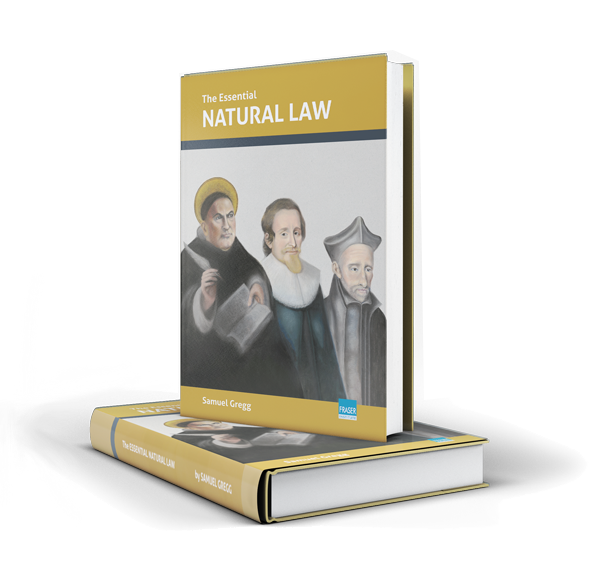
Few ideas have been as influential in the development of moral, political, legal, and economic thought in the broad Western tradition as the idea of natural law. It is also true that the understanding of natural law and its influence on specific norms and institutions—rights, justice, private property, rule of law, limited government, etc.—is not anywhere near as widespread in the twenty-first century as it was just 100 years ago. This book aims to help rectify this deficit by explaining the basic principles of natural law and highlighting significant contributions that key natural law scholars have made to ideas and concepts that have encouraged the growth of free societies.
The idea of natural law holds that all people, whatever their ethnicity, culture, or religion, can know the difference between good and evil, right and wrong. The idea, for example, of the Golden Rule—do unto others as you would have them do unto you—is understood as a principle of moral conduct that everyone can know. While such beliefs are applied to different and changing conditions and problems, the core principles always apply.
However, natural law is not a static tradition of thought. It has developed over time, partly through natural law theorists clarifying particular concepts, and partly through its proponents responding to ongoing intellectual challenges to its positions and changes in the realm of politics, society, and the economy. Whether it was the encounter between Europeans and the peoples of the New World in the late fifteenth century, or questions about what justice meant in the context of emerging market economies in the late eighteenth century, natural law scholars have applied natural law principles to discern how people should choose and act in these changing contexts.
While this book seeks to introduce readers to how natural law thinkers have contributed to the enhancement of freedom in the political, legal, and economic realms, we will focus on some scholars more than others. These include individuals like Thomas Aquinas (1225-1274), Francisco Suárez, and Hugo Grotius, to name just a few. Some focused their attention on very practical challenges arising from liberty of commerce within and across sovereign boundaries, while others explored the rights and obligations of individuals to each other as well as the state. All these endeavors helped to furnish an apparatus for thinking about the political, legal and economic institutions necessary for promoting freedom and justice.
Watch the Videos
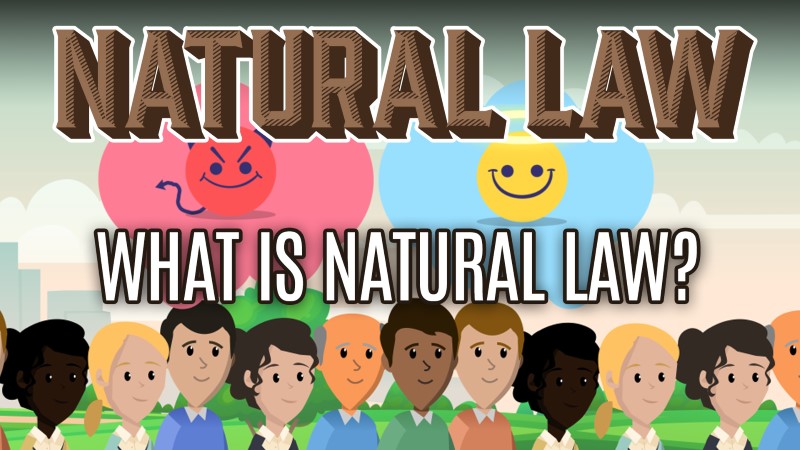
What is Natural Law
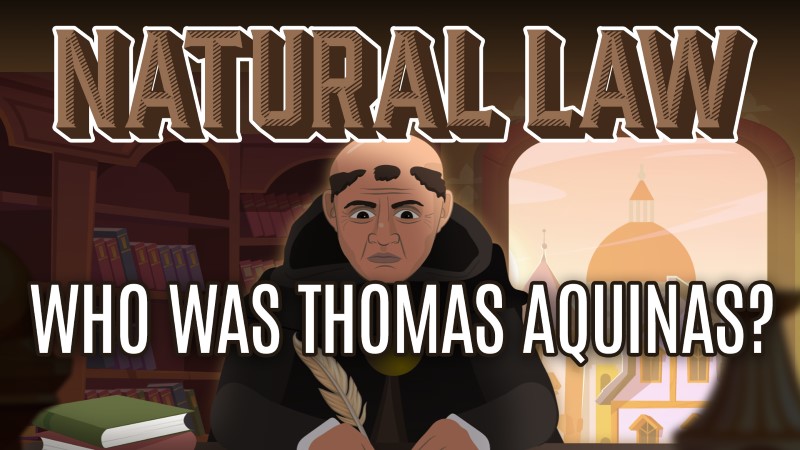
Who Was Thomas Aquinas?
The Legacy of Natural Law
Download the Book
Get a digital copy of the book. Choose the version you prefer below.
Explore the Book
Chapter by chapter summary of the book.
-

Chapter 1
What is Natural Law?
The origins of the expression “natural law” are to be found in debates between the Greek philosopher Plato and those thinkers known as the Sophists. In broad terms the Sophists believed that politics was not about questions of right, wrong, justice, or injustice. They maintained that social arrangements reflected whoever was the strongest. Hence, it was “natural” for the strong to rule the weak. Such was the “law” of human “nature.”
Plato disagreed with the Sophists. For him, politics and justice could not be reduced to the rule of the strong. Nevertheless, Plato recognized the rhetorical power of the term “natural.” He thus decided to use it for his own purposes. In Plato’s thought, “natural” became a way of saying “human,” and one distinctive feature of humans is that we have reason. This is what makes humans different from animals. They act according to instinct alone. We do not.
-
Chapter 2
Rights and Justice
The legal obligation to respect rights has been formally recognized by most countries since the 1948 United Nations Declaration of Human Rights. Yet as one of the members of the Declaration’s drafting committee stated at the time, “We are unanimous about these rights on condition that no one asks why” (Thils, 1981: 51). The participants, it appears, decided that agreement on a common philosophical foundation for rights was unlikely to be achieved.
Rights are usually presented as a product of a modern post-Enlightenment world and associated with figures like John Locke and events such as the American and French Revolutions. There is, however, a strong case to suggest that the first substantive conceptions of rights were developed by medieval natural law thinkers whose ideas on this subject were clarified and developed further by their modern counterparts, some of whom were reacting to expansionist tendencies on the state’s part.
-

Chapter 3
Limited Government and Rule of Law
Any discussion of the nature and ends of liberty and justice inevitably touches upon the role of government and law in society. A good place to begin reflecting upon natural law’s approach to these questions is Aquinas’s understanding of law.
In his Summa Theologiae, Aquinas defined law “an ordinance of reason for the common good, made by him who has care of the community, and promulgated” (ST I-II, q.90, a.4). “Law” in this statement means laws formally made by the legitimate political authority. “Reason” means natural law, which signals the law itself must be reasonable rather than driven by whatever the authorities just happen to want. “Him” means the political authority: i.e., government and legal officials such as legislators, judges, and government ministers. Finally, the “common good” means the conditions that assist individuals and groups in a given political community to make free choices for the goods that promote human flourishing.
-

Chapter 4
Property and the Economy
If individuals and communities are to make free choices for moral goods and to be virtuous, they often require what might be called “instrumental goods.” These are goods that have their own value and which can be used to protect and promote the pursuance of fundamental goods like work and truth, but which are not in themselves fulfilling.
-

Chapter 5
The Law of Nations and International Trade
Prior to the eighteenth century, the dominant economic framework of post-medieval Western Europe was essentially mercantilism. This was a way of economic thinking and acting which held that nations became rich by encouraging exports and restricting imports (LaHaye, 2021). Governments acted to protect merchants from foreign competition by imposing tariffs and quotas on imports, as well as granting monopolies on the production of particular goods or trade routes to particular merchants. Trade by sea was especially restricted under mercantile arrangements. While it was rare for states to ban outright the importation of goods and services from abroad, governments introduced a number of restrictions that served to minimize competition.
-

Chapter 6
Conclusion
Over the centuries, natural law ethics and reasoning has proved extraordinarily resilient. The relative influence of different philosophical positions waxes and wanes. But natural law’s understanding of the character of reason and the human mind’s capacity to know the truth about reality remain immensely attractive to people living in very different social, political, economic conditions,
About the Author
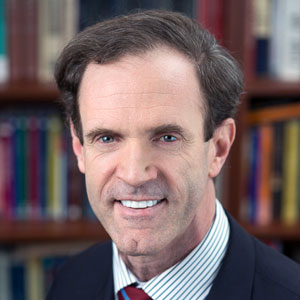
Samuel Gregg
Samuel Gregg is Research Director at the Acton Institute in Grand Rapids, Michigan. He is also a Visiting Scholar at the Feulner Institute at the Heritage Foundation in Washington DC, a Fellow at the Center for the Study of Law and Religion at Emory University in Atlanta, Georgia, and a Contributing Editor at Law and Liberty, part of the Liberty Fund Network in Indianapolis, Indiana. The author of 16 books—including the prize-winning The Commercial Society (2007), Wilhelm Röpke’s Political Economy (2010), Becoming Europe (2013), the prize-winning Reason, Faith, and the Struggle for Western Civilization (2019), and over 400 articles and opinion pieces—he writes regularly on political economy, finance, American conservatism, Western civilization, and natural law theory. He served as President of the Philadelphia Society from 2019-2021. He is the General Editor of Lexington Books’ Studies in Ethics and Economics Series.
He also sits on the Academic Advisory Boards of Campion College in Sydney, Australia; the Fundación Burke in Madrid, Spain; the Instituto Fe y Libertad in Guatemala City, Guatemala; the Institute of Economic Affairs in London, United Kingdom; the Argaman Institute in Jerusalem, Israel; as well as the editorial boards of the Journal of Markets and Morality and Revista Valores en la sociedad industrial. In 2001, he was elected a Fellow of the Royal Historical Society, a Member of the Mont Pèlerin Society in 2004, and a member of the Royal Economic Society in 2008.
Additional Resources
The political ideas that fully came together under the name “liberal” in the early nineteenth century—the ideas we often now refer to as “classical liberalism”—emerged out of major debates and developments from the late 1600s to the late 1700s, part of the broad European intellectual movement of that era that came to be known as “the Enlightenment.”
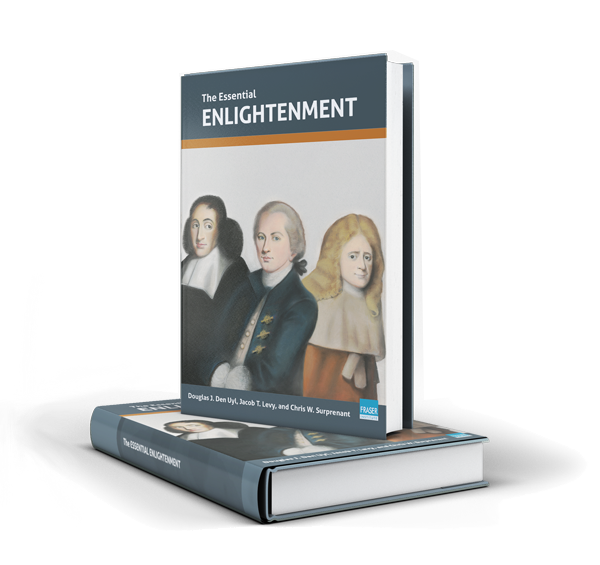
This volume shows how the Enlightenment and the development of liberal ideas were woven together by looking at three defining figures of the era: Baruch Spinoza (writing in the mid-1600s), the Baron de Montesquieu (mid-1700s) and Immanuel Kant (whose career reached its height in the final two decades of the 1700s). Both Spinoza and Kant were concerned with fundamental philosophical questions about what we could know about God, morality, the nature of the world, and humanity’s place in it. Montesquieu wrote almost nothing about such questions, drawing instead from global history and comparative law.
While the Enlightenment is associated with many things, one of them was the struggle to understand morality and human nature through the use of reason rather than relying on religious authority; another was the attempt to understand political and social orders in ways that would prevent a return to the wars of religion that had divided Europe in the 1500s and the first half of the 1600s. In various ways, Spinoza, Montesquieu, and Kant all argued for religious toleration—for the peaceful coexistence of different organized ways of understanding God within civil governments that didn’t enforce any one of those ways. Their support of freedom of religious thought also made all of them supporters of free inquiry and free speech. The three thinkers likewise shared commitments to the rule of law and to constitutional forms of government that would constrain the discretionary power of any one ruler.
This book does not aim to be a complete history of the Enlightenment. Rather, it is an introduction to three of the most important contributors to it. The Enlightenment partly took shape around their contributions. So, too, did the development of liberalism.
Watch the Videos
What was the Enlightenment?

Baruch Spinoza
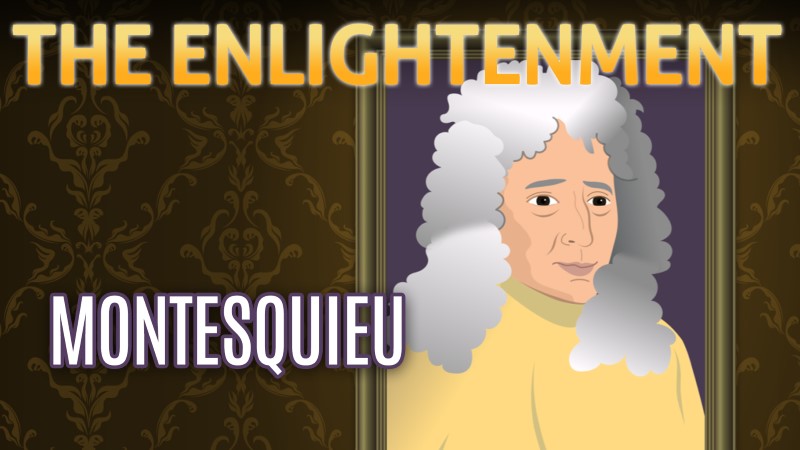
Montesquieu
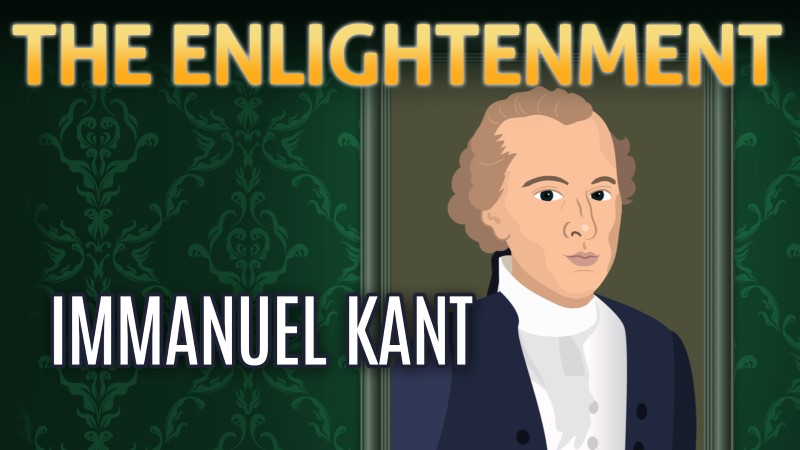
Immanuel Kant
Download the Book
Get a digital copy of the book. Choose the version you prefer below.
Explore the Book
Chapter by chapter summary of the book.
-

Chapter 1
Spinoza and the Origins of Liberalism
Whether Feuer’s claim is strictly true or not need not concern us, but it may very well be. Liberalism in the modern world probably did begin with Spinoza a generation before John Locke, who is usually the thinker most associated with its origin. Born Baruch Spinoza, but sometimes identified as Benedict de Spinoza, he lived from 1632 to 1677 in the Netherlands. We shall have a bit more to say about Spinoza’s biography later, but it is important to know from the outset that the Netherlands at that time was the freest country in Europe. There is no doubt that its environment affected Spinoza’s reflections on political and social matters.
-
Chapter 2
Spinoza on Toleration
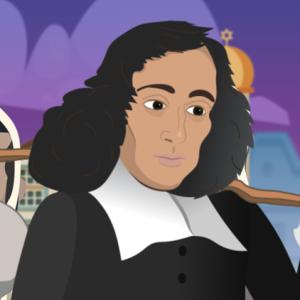
In 1656, at the age of 23, Baruch Spinoza was literally excommunicated from the Jewish community in Amsterdam for his views on God, the law, and the soul. Members of that community were forbidden to associate or communicate with him. This happened even though Spinoza’s main discussion of religion, in his Tractatus Theologico-Politicus (TTP), did not appear until 1670. Across Europe, religion was perhaps the predominant cultural force. Controversies abounded and intolerance was common, even, at times, in relatively tolerant countries such as the Netherlands. Within a given religious sect, conformity was often strictly enforced. In addition, during the early years of Spinoza’s life, the “30 Years War” was raging. That war began as a religious war, though by the end it became more of a war over religious affiliations than over religion itself. Religious affiliation was perhaps the most common basis for group identification in that era. In Spinoza’s case, during his lifetime he circulated among some of the more liberal and radical religious sects. He had, for example, a number of Mennonite friends, and that sect was an offshoot of the Anabaptist movement, which advocated a strong separation of church and state. No doubt their “radical” doctrines both attracted and subsequently influenced Spinoza—and also put him at odds with the establishment of both the Jewish and Christian communities in Amsterdam.
-

Chapter 3
Spinoza on Freedom and Power
In political philosophy there is an approach called “social contract” theory. Basically, this view began, at least in the modern era, with Thomas Hobbes and holds that the sovereign power—and sometimes also the legitimacy of that power—is established by people “contracting” with one another to set up a government. The time prior to when people get together to set up their government is known as the “state of nature.” The state of nature is thus that period of time, before any general agreement, when there is no government. There are different theories about what such a time would be like, or even whether it is truly possible to have a state of nature. Also, there are different theories about how the move out of the state of nature would go. Although it is debatable whether Spinoza is actually a social contract theorist, he does comment about our natural state and our natural rights, as well as the setting up of a government. Let’s begin with what Spinoza takes to be our natural rights and then move to the state of nature and the rights of government.
-

Chapter 4
Montesquieu on Despotism, Moderation, and Liberty
Charles-Louis de Secondat, Baron de La Brède et de Montesquieu (1689- 1755) was a member of the provincial French nobility, a jurist, a celebrated novelist, and arguably the decisive figure in inaugurating the key decades of the Enlightenment in the study of society. Earlier thinkers, including Spinoza, had drawn on new scientific ways of thinking to try to understand the human mind, the nature of reality, and the relationship between man and God. But the flourishing of political, social, and economic thought that we associate with the Enlightenment, with thinkers as varied as Rousseau, Smith, Hume, Kant, Beccaria, Ferguson, Madison, Jefferson, Paine, Wollstonecraft, and Condorcet, only got fully underway with the publication of Montesquieu’s The Spirit of the Laws (1748).
-
Chapter 5
Montesquieu on Pluralism
Traditional political theories often focused on unity and uniformity as key aspects of a well-governed society. Difference, disagreement, and division were at best problems to manage, and at worst signs that there was no true community at all. From ancient Greece onward, political thought was marked by such metaphors as the ship of state, a ship on which we must all row in the same direction, one chosen by a captain we all obey, if we are to get anywhere; and the body politic, a body that acts as one, trying to preserve itself under the direction of a single mind.
-

Chapter 6
Montesquieu on Commerce
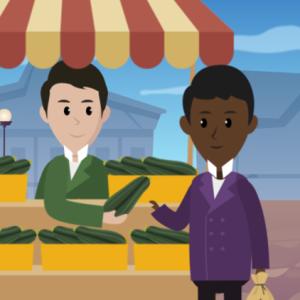
The traditional emphasis on unity in political thought we discussed in the previous chapter accompanied a distrust of commerce, with its division of labour, difference between buyers and sellers, class differences, specialization, and conflicts of interest. In Part IV of The Spirit of the Laws Montesquieu decisively rejects that vision, and develops what comes to be known as the doux commerce thesis: commerce and trade soften and polish what had been harsh, warlike, and barbaric values. They have transformed the modern world and drawn it together. Although they have also provided the occasion for new kinds of international injustices through imperialism and colonialism, they tend to encourage toleration, peace, and justice. Montesquieu’s doctrine of the separation of powers shaped constitutional thought in the United States and elsewhere. His general approach to legal reform and criminal justice, his support for constitutional moderation, and his opposition to despotism were crucial for subsequent liberal political thought. But his account of commerce was probably his most important, transformative contribution to the social thought of the era of Enlightenment and to the development of what became liberal social theory. By putting the development of commerce at the center of his account of the transformations in European politics, and by developing an account of trade and exchange that stressed their moral advantages, he paved the way for the intellectual revolutions of the next few decades that were associated with the Scottish Enlightenment. The Spirit of the Laws was a widely acknowledged source and influence for the ideas subsequently developed by such authors as David Hume, Adam Ferguson, and Adam Smith.
-
Chapter 7
Kant’s Ethics
Immanuel Kant is widely regarded as one of the most important thinkers in the history of Western philosophy for his contributions to both epistemology— the study of what there is to know and how we can know it—and ethics— what we generally understand to be the study of right and wrong. But for Kant, ethics is closely tied to epistemology, rationality, and the characteristics of rational beings. Instead of focusing on whether certain actions are right or wrong and why they are right or wrong, Kant’s moral philosophy focuses on the principles underlying those actions, how they are adopted, and whether or not they are consistent with individual freedom or autonomy.
-
Chapter 8
Kant’s Politics
Kant’s account of morality focuses on a person’s capacity to be the agent and owner of his own actions, not merely a conduit for social and psychological forces or influences over which he has little or no control. His discussion of this connection between morality and freedom centers on autonomy of the will. Because morality is connected with autonomy, and autonomy is connected with an individual’s ability to participate in the process of rational deliberation and choosing ends for himself, it appears as if an individual alone should be the sole determining factor in whether he becomes virtuous. But that is not the case.
-

Chapter 9
Kant’s Legacy
There’s a story in academic circles that serious philosophical work in the liberal political tradition coming out of Enlightenment thinkers died after Kant, only to be resurrected by Harvard University philosopher John Rawls in the 1970s. While this story contains a bit of hyperbole, there’s little doubt that, after Kant, no writing before 1971 had the impact of Rawls’s A Theory of Justice. Rawls’s project was to take the principles that he identified as central to Kant’s moral philosophy—principles like the obligation not to treat another moral being merely as a means to accomplishing some end—and apply those principles to the political question of what justice entails and how best to bring it about.
-

Chapter 10
Conclusion
The Enlightenment as an intellectual movement is commonly taken to end with Kant. The early modern political and social world that Enlightenment thought arose out of and theorized about was disrupted and transformed by the American, Haitian, and, especially, French Revolutions. By the time self-conscious and self-identified liberal political thought and political parties coalesced in the era after the Napoleonic wars had ended, the problems faced in politics seemed very different. States became much more powerful and centralized under the force of wartime military competition. Religious persecution and censorship and the power of absolute kings faded by comparison with the rise of nationalism and worries about the kind of violent, mob rule seen in France during 1793 and 1794. A generalized commitment to constitutional government or republicanism gave way to complicated institutional questions about how much to democratize government, how quickly: how much of a society could take part in voting and elections at any given level of economic and educational development without risk of revolution.
About the Author

Douglas J. Den Uyl
Douglas J. Den Uyl, Ph.D., was born in Monroe, Michigan and attended Kalamazoo College (B.A. in Political Science and Philosophy), the University of Chicago (M.A. in Political Science), and Marquette University (Ph.D. in Philosophy). He is interested in the history of ideas and has published essays or books on Spinoza, Smith, Shaftesbury, Mandeville, and others. His interests also include moral and political theory. He is the author of Power, State and Freedom: An Interpretation of Spinoza’s Political Thought and God, Man and Well Being: Spinoza’s Modern Humanism. He co-founded the American Association for the Philosophic Study of Society, The North American Spinoza Society, and The International Adam Smith Society. He taught Philosophy and was Department Chair and Full Professor at Bellarmine University before coming to Liberty Fund where he is now Vice President Emeritus and Benjamin A. Rogge Resident Scholar.

Jacob T. Levy
Jacob T. Levy is Tomlinson Professor of Political Theory, Chair of the Department of Political Science, and associated faculty in the Department of Philosophy at McGill University. He was Founding Director of McGill’s Yan P. Lin Centre for the Study of Freedom and Global Orders in the Ancient and Modern Worlds, and is coordinator of the Lin Centre’s Research Group on Constitutional Studies. He is the author of The Multiculturalism of Fear (Oxford, 2000) and Rationalism, Pluralism, and Freedom (Oxford, 2015). He is a Senior Fellow at the Niskanen Center and the Institute for Humane Studies.

Chris W. Surprenant
Chris W. Surprenant is Professor of Ethics, Strategy, and Public Policy; Director of the University Honors Program; and Founding Director of the Urban Entrepreneurship & Policy Institute at the University of New Orleans. He is the author of Injustice for All: How Financial Incentives Corrupted and Can Fix the US Criminal Justice System (Routledge, 2019) and Kant and the Cultivation of Virtue (Routledge, 2014).
Additional Resources
Ronald Coase (1910-2013) was one of the most influential economists of the 20th century. His influence is due largely to two publications, the only two cited in the announcement of his Nobel Prize: “The Nature of the Firm” (1937) and “The Problem of Social Cost” (1960). These two articles are among the most-cited works in economics. The ideas Coase developed in these two works led to entirely new fields of inquiry in economics, law, management, and political science, and in conjunction with his article on using markets to allocate radio spectrum (Coase 1959), spawned new market design theory and practice that helped to transform our society and enable innovation and digitization.
Coase’s style of theory, analysis, and persuasion was narrative, fact-driven, and much less formal than is the norm in economics. Coase spent his career asking deceptively simple questions that revealed profound complexities in the arrangement of economic activity. Why do firms exist? Why don’t we allocate scarce resources such as radio spectrum by using markets instead of regulation? Can people resolve conflicts over resource use through bargaining and contracts, or is government regulation necessary? Is a lighthouse a public good that requires government provision? How does a durable goods monopolist price its output?
Ronald Harry Coase was born in Willesden, a London suburb, on December 29, 1910. While attending the University of London, from which he graduated with a Bachelor of Commerce degree in 1932, Coase was awarded the Sir Ernest Cassell Travelling Scholarship. This scholarship enabled him to travel to the United States, study at the University of Chicago from 1931 to 1932 with Frank Knight and Jacob Viner, and visit several factories to learn how they organized production. In particular, his visits to Ford and General Motors factories provided an empirical foundation for his first paper, “The Nature of the Firm” (1937). He initially taught in the UK, and then his academic career saw him migrate to the US. After some years at the University of Virginia, he spent most of his career on the law faculty at the University of Chicago (starting in 1964), where he also served as an editor of the Journal of Law and Economics.
He was awarded the Nobel Prize in economics in 1991 “for his discovery and clarification of the significance of transaction costs and property rights for the institutional structure and functioning of the economy.”
Coase was consistently critical of what he called a “blackboard economics” approach to economic theory that focuses on optimization models with defined constraints, not on the actual structures of interactions and relationships that underlie economic activity. In many ways Coase found this to be empty theorizing because it overlooked precisely what is economic—the diverse ways people organize production and economic activity for mutual benefit.
Coase wrote and worked until his death on September 2, 2013.
Listen In
Ronald Coase Part 1: Reconciling Theory with Reality
Dr. Lynne Kiesling, author of The Essential Ronald Coase, joins host Rosemarie Fike to discuss Ronald Coase, one of the most influential economic thinkers of the 20th century, including his dissection of Price Theory in favour of real market evidence and tenure at the University of Chicago Law School that eventually lead to his Nobel Prize.
- Follow or Subscribe:
Ronald Coase Part 2: Markets Don’t Fail, They Fail to Exist
Dr. Lynne Kiesling, author of The Essential Ronald Coase, once again joins host Rosemarie Fike to discuss Ronald Coase, specifically his theory of markets and what exactly prevents them from naturally emerging.
- Follow or Subscribe:
Watch the Videos
Who Was Ronald Coase?

What Are Transaction Costs?
Transaction Costs & Institutions

Why Do Firms Exist?
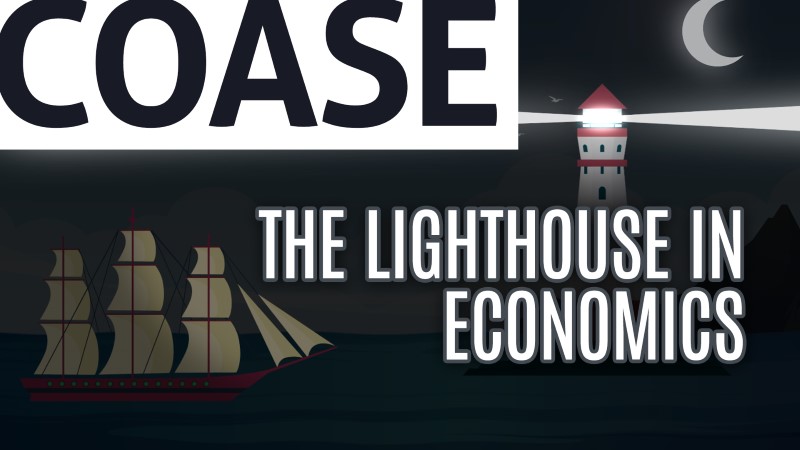
The Lighthouse in Economics
The Problem of Social Cost
Download the Book
Get a digital copy of the book. Choose the version you prefer below.
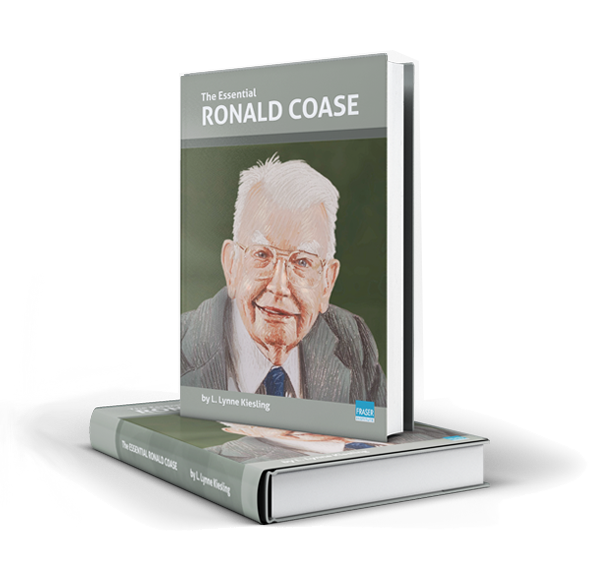
Explore the Book
Chapter by chapter summary of the book.
-

Chapter 1
Institutions, Property Rights, and Transaction Costs
In all of his work Coase emphasized the importance of incorporating institutions into economic theory and empirical economic research. Institutions are the arrangements, the “rules of the game,” that structure social interactions. They vary from informal social norms about acceptable conduct to formal law enshrined in precedent or legislation. Institutions structure social interactions in the sense that they shape the incentives that individuals face as they make decisions, decisions that can affect their own outcomes and the outcomes for other people.
-

Chapter 2
Why Do Firms Exist?
In response to the question “why do firms exist?” Coase answered that they exist in order to address—specifically, to keep to a minimum—transaction costs. Coase’s answer unleashed a stream of influential research that is still generating new ideas today (although he did not use that phrase in his 1937 article, calling them “marketing costs” instead). Coase defined transaction costs as “the cost of using the price system” (1937: 390). A more general definition is the cost of establishing and maintaining property rights (Allen 1999:898). As examples of transaction costs, Coase included the task of discovering what market prices are and the cost of negotiating a separate contract for each transaction. Institutions emerge to reduce those costs, but they can never be eliminated entirely.
-

Chapter 3
Resolving Disputes: The Problem of Social Cost
How can people resolve conflicts over resource use when that use creates costs for people who are not party to the transaction? Coase used his approach of examining how people resolve such conflicts in reality to look at the history of how disputes were resolved in English common law, from grazing cattle eating a neighbouring farmer’s crops to industrial smoke harming nearby residents.
-

Chapter 4
Applied Transaction Cost Economics: Spectrum Allocation
In 1959 Coase published “The Federal Communications Commission,” an article that explained the institutional and historical background of the development and use of radio spectrum in the United States since the 1910s. Coase asked if there was a feasible way to allocate the use of radio spectrum to create the most possible value out of it, which the then-current public interest hearings method did not accomplish. The policy objective should be not to minimize interference along the spectrum, but to maximize output from the spectrum, treating interference as a constraint to be managed (or something that innovation would reduce). Why not define a property right in a specific part of the spectrum for each user, and make those rights tradable? Coase here followed the suggestion of Leo Herzel (1951), who proposed defining spectrum ownership rights and allocating them through auctions.
-

Chapter 5
Applied Transaction Cost Economics: Emission Permit Trading
Transaction costs, that is, the costs of defining property rights, shape incentives and how we organize the use of resources. As the example in the previous chapter of spectrum license auctions shows, these ideas have significant policy implications, even if their implementation takes decades. The use of emission permit trading in the United States to reduce air pollution is another example; it too, has long-lasting and great beneficial effects. The design of the emission permit trading program has several Coasean features, particularly the emphasis on institutional design to reduce transaction costs.
-

Chapter 6
Coase and the Lighthouse in Economics
Since the 19th century economists have routinely posed the lighthouse as an example of a public good. Ships coming in to port benefit from lighthouse services. Ships cannot individually be excluded from using the lighthouse if they have not paid for it, so the public good argument suggests that ships will free-ride on the payments of others for the provision of the lighthouse. If the free-rider problem is extreme, then there won’t be enough lighthouses, or any at all. For that reason, economists starting with John Stuart Mill in 1848 and most notably Paul Samuelson, who formalized public good theory in 1954, concluded that public goods should be supplied by governments and paid for through taxation. Coase was dissatisfied with this treatment of public goods, and in “The Lighthouse in Economics” (1974) he laid out his critique and an alternative analysis.
-

Chapter 7
Problems of Monopoly
An interesting and thorny question in the economic organization of production is monopoly, that is, when a single firm produces all output sold in a market. Coase analyzed two different monopoly questions: how should public utilities price their output, and how should a monopolist that produces a durable good price it?
-

Chapter 8
Conclusion
Coase’s pioneering work brought institutions, property rights, and transaction costs into economic analysis, catalyzing new research in diverse fields in economics, management, law, political science, and other social sciences. The fields of law and economics, property rights economics, transaction cost economics, and institutional and organizational economics built upon Coase’s original contributions to our understanding of the organizational structure of production and the effect of law on economic activity. Founded in 2000, the Ronald Coase Institute works to promote institutional and transaction cost scholarship, particularly by connecting young international scholars and providing them with valuable research opportunities. Similarly, the annual Institutional and Organizational Economics Academy brings together European graduate students working in the Coasean tradition. Through such efforts, research and application in institutional, organizational, and transaction cost economics continues to expand and thrive.
About the Author

Lynne Kiesling
Lynne Kiesling is a Research Professor and Co-Director of the Institute for Regulatory Law & Economics in the College of Engineering, Design and Computing at the University of Colorado-Denver. She also provides advisory and analytical services as the President of Knowledge Problem LLC. Her research in grid modernization and transactive energy uses institutional and transaction cost economics to examine regulation, market design, and technology in the development of retail markets, products, and services, and the economics of smart grid technologies in the electricity industry. She served as a member of the National Institute of Standards and Technology’s Smart Grid Advisory Committee, and is an emerita member of the GridWise Architecture Council. Her academic background includes a BS in Economics from Miami University (Ohio) and a PhD in Economics from Northwestern University.
Additional Resources
The UCLA tradition carries on in the work of dozens of economists who earned their PhDs at UCLA during its golden years. Because their work spread beyond UCLA, the tradition lives on in the work of scores of economists who had no formal connection with the School. The most important economists at UCLA during the 1970s were Armen Alchian, Harold Demsetz, Sam Peltzman, Benjamin Klein, Robert Clower, Axel Leijonhufvud, Jack Hirshleifer, William Allen, and George Hilton.
A distinguishing feature of most of the UCLA economists’ contributions is that they were non-mathematical. This was especially notable in an era in which mathematics had almost taken over economics. The major UCLA School contributors used mainly words and occasionally graphs. Another distinguishing feature is their use of basic economic analysis to understand behaviour that had previously not been understood or had even been misunderstood.
The best-known member of the School, Armen Alchian, taught at UCLA from 1946 until his retirement in 1984. His insights and writings underlie a distinctive theme of the School’s approach to economics: in most productive activity, the profit motive, combined with private property rights, successfully aligns the interests of producers and consumers, often in subtle ways. Alchian had no use for formal models that did not teach us to look somewhere new in the known world. Nor had he any patience for findings that relied on fancy statistical procedures. Alchian saw basic economics as a powerful tool for explaining much of human behaviour in both market and non-market settings.
The second most prominent member of the UCLA School was Harold Demsetz, who made major contributions to the study of property rights and to regulation and antitrust policy. He argued that market concentration could reflect the superior efficiency of firms with large market shares primarily resulting from innovation or from economies of scale. Government efforts to break up large firms or restrain their growth was, therefore, likely to reduce innovation and economic efficiency, with consequent harm to consumers.
Other academic research at the UCLA School included Klein’s work in monetary theory, and Clower and Leijonhufvud’s work in macroeconomics. Another famous UCLA School economist was Thomas Sowell, who wrote his 1975 book Race and Economics, a precursor to his much more extensive work on the economics of various ethnic groups, while at UCLA.
Listen In
Key Insights of UCLA—Part 1: Why the profit motive is better for industry and better for people
David Henderson, emeritus professor of economics with the Naval Postgraduate School in Monterey, California, and host Rosemarie Fike dive right into conflict aversion in school, in the home, and even discuss how the UCLA school illuminated how the profit motive helps reduce discrimination by automatically imposing a penalty on those who do.
- Follow or Subscribe:
Key Insights of UCLA—Part 2: Why good economics is not often good politics
Steve Globerman, professor emeritus at Western Washington University and senior fellow as well as the Addington Chair in Measurement at the Fraser Institute, joins host Rosemarie Fike to continue the discussion on the UCLA school of thought, including rent control, the housing crisis, the arguable role of city governments, and maintaining quality of life.
- Follow or Subscribe:
Key Insights of UCLA—Part 3: Markets and Social Issues
David Henderson—emeritus professor of economics with the Naval Postgraduate School in Monterey, California—and Steve Globerman—professor emeritus at Western Washington University and the Addington Chair in Measurement at the Fraser Institute—both join Rosemarie Fike once more to talk about why the UCLA school of economics has remained relevant in today's world. Especially how even when it comes to social issues, companies are ultimately bound by the preferences of their consumers.
- Follow or Subscribe:
Watch the Videos
What was the UCLA School of Economics?

The Nirvana Fallacy

Why Property Rights Are Key to Efficiency and Reduce Conflict

Confusing Efficiency for Market Power
The Economics of Unintended Consequences

How Property Rights & Profits Reduce Discrimination
Download the Book
Get a digital copy of the book. Choose the version you prefer below.
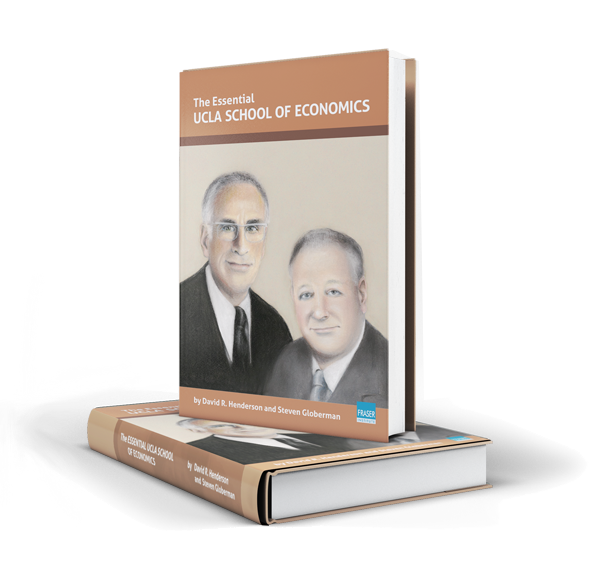
Explore the Book
Chapter by chapter summary of the book.
-

Chapter 1
What was the UCLA School?
The UCLA School of economic thinking was a strong free-market tradition in late twentieth century economics. Some who observed it from a distance humorously referred to UCLA as “the University of Chicago at Los Angeles.” In some ways it was almost as strong as the University of Chicago School, whose most notable members in the 1960s and 1970s were Milton Friedman, George Stigler, and Gary Becker. In other ways, the UCLA School was even stronger. Armen Alchian, in particular, was one of a kind. His relentless application of economic analysis, especially analysis of property rights, was not replicated anywhere else. In the area of property rights, Harold Demsetz was a close second. The UCLA School was at its zenith from the mid-1960s to the late 1980s.
The UCLA tradition carries on in the work of dozens of economists who earned their PhDs at UCLA during its golden years. Also, because the work spread beyond UCLA, the tradition lives on in the work of scores of economists who had no formal connection with UCLA.
-

Chapter 2
Can Property Rights Help Us Understand People’s Actions and Even Reduce Conflict?
Should restaurants allow smoking or not? Should schools teach evolution or intelligent design or both? Should insurance companies cover contraception? Should we be able to take off our shoes in your living room?
You might think that that last question doesn’t belong with the first three. After all, the first three questions are momentous ones about “public policy.” The last one is only about the rules you have for our behaviour in your living room—a “private policy” question. And your answer to that question will depend on how you want to use your property.
-

Chapter 3
How the Profit Motive Reduces Racial and Other Discrimination
The legal ability of owners of private property to use their human and physical assets to earn income, combined with competition from other owners of similar assets, creates a powerful incentive for those assets to be used efficiently. This is perhaps the most well-known argument for free markets. This is certainly a major theme underlying much of the research done by members of the UCLA School.
-

Chapter 4
When Do Property Rights Come About?
When and why do property rights come about? It’s an important question but it was relatively unstudied by economists before the UCLA School got its hands on the issue. A pathbreaking article that gave an answer was Harold Demsetz’s 1967 “Toward a Theory of Property Rights” published in the American Economic Review.
-

Chapter 5
Firms Exist to Solve Problems
Economists have long been interested in the following issue: why are some types of economic activity carried out within individual organizations, while other types of economic activity are carried out through market exchanges between independent organizations or individuals. The obvious answer is that if it is more efficient to carry out transactions within the boundaries of a single organization it will be done that way, and when it is not, transactions will be carried out between independent economic agents. But why are some transactions carried out more efficiently within organizations than between organizations? It also raises a related question: why do organizations take different forms? For example, why are so many law firms and accounting firms organized as partnerships or limited liability companies while others are organized as corporations with publicly traded stocks? And why does organizational form matter?
-

Chapter 6
The Nirvana Approach
In the now-famous article quoted above, Harold Demsetz, then back at the University of Chicago after his earlier time at UCLA, presented the “nirvana approach” and contrasted it with the “comparative institution” approach. His term “the nirvana approach” has become famous and most economists who discuss it currently refer to it as the “nirvana fallacy.” The latter term has become so well known that it has earned its own entry in Wikipedia.
-

Chapter 7
Does the High Market Share of a Few Companies Imply Market Power?
Demsetz and Peltzman’s work primarily provides empirical evidence challenging the conventional wisdom that antitrust authorities should discourage or prevent mergers and acquisitions because allowing only a smaller number of firms in a market will primarily result in higher prices that hurt consumers. The UCLA School also provides novel theoretical explanations for why mergers and acquisitions could improve economic efficiency, thereby making consumers better off.
-

Chapter 8
Regulation: The Economics of Unintended and Intended Consequences
One of the UCLA School’s main contributions to our understanding of the regulatory process is that it shows how regulators behave. Rather than acting as all-knowing promoters of the social good, regulators act in their own self-interest. Specifically, while in their positions, regulators seek to maximize political support, which translates into more secure on-the-job tenure, larger agency budgets and higher salaries, and greater immunity from the scrutiny of legislators.
-

Chapter 9
Do Firms Need to Maximize for the Model to Fit?
The setting for Alchian’s article, his first major submission accepted by a top journal, was a heated debate in economics journals in the 1940s about whether it was reasonable to assume that firms maximize profits. Defenders of that assumption argued that firms acted as if they maximized profits. Some critics of the assumption argued that the fact of uncertainly meant that they couldn’t maximize profits. Alchian took a different perspective from that of either the defenders or the critics. He did not argue that firms act as if they maximize profits. And he agreed with one critic, Gerhard Tintner, that when firms’ managers cannot have certainly, the very concept of profit maximization is suspect.
-

Chapter 10
Can Economies Recover Quickly from Disaster?
Jack Hirshleifer, one of the key members of the UCLA School, was ever the empiricist. In the early 1960s, when decision-makers in the US military were concerned about the after-effects of a nuclear war, Hirshleifer did a pioneering study for the US Air Force on the “causes, characteristics and consequences of important historical disasters.” The study, formally titled RAND Corporation Memorandum RM-3079-PR, was published in April 1963 and was later reprinted in his 1987 book Economic Behaviour in Adversity.
While works of fiction often depicted a descent into savagery after a major catastrophe, Hirshleifer found the opposite: when property rights were fairly secure and governments avoided economy-wide price controls, societies were relatively peaceful and economies recovered quickly.
-

Chapter 11
Concluding Comments
Scholars often see the economists of the UCLA School as ferocious defenders of free markets. They typically are. However, the claim should be qualified. Leading researchers of the UCLA School never claimed that free markets operate perfectly and always achieve textbook efficiency. As the earlier chapters in this book have shown, Alchian, Demsetz, and other members of the School acknowledged that phenomena such as imperfect information, transactions costs, and opportunism are pervasive. The critical issue that such phenomena raise, given real-world conditions, is whether a system relying upon well-defined property rights and private transactions results in more-efficient economic outcomes than a system that relies upon government proscriptions and regulations. The major contribution of the economists from the UCLA School is their careful and wide-ranging explanations and demonstrations of how and why private property rights and market competition are typically the most efficient institutional arrangement in an imperfect world characterized by scarcity.
About the Author
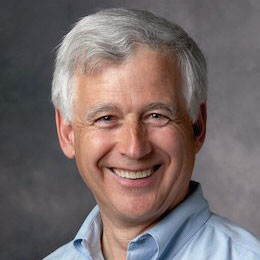
David R. Henderson
David R. Henderson is an emeritus professor of economics with the Naval Postgraduate School in Monterey, California, a research fellow with the Hoover Institution, and a senior fellow of the Fraser Institute.
Professor Henderson is a widely respected public policy expert and educator. He is also the editor of The Concise Encyclopedia of Economics, a comprehensive but accessible summary of economics.
Born and raised in Canada, Professor Henderson earned a B.Sc. degree in mathematics from the University of Winnipeg before heading south to complete his Ph.D. in economics at the University of California, Los Angeles.
He is a frequent contributor to The Wall Street Journal and was previously a frequent contributor to Fortune. He has also written scholarly articles for the Journal of Policy Analysis and Management, Journal of Monetary Economics, Cato Journal, Regulation, Contemporary Policy Issues, and Energy Journal.
Professor Henderson served as a senior economist on President Reagan’s Council of Economic Advisers from 1982 to 1984, specializing in energy and health policy.
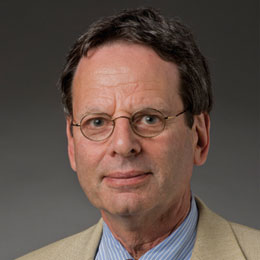
Steven Globerman
Steven Globerman is Resident Scholar and Addington Chair in Measurement at the Fraser Institute as well as Professor Emeritus at Western Washington University. Previously, he held tenured appointments at Simon Fraser University and York University and has been a visiting professor at the University of California, University of British Columbia, Stockholm School of Economics, Copenhagen School of Business, and the Helsinki School of Economics.
He has published more than 200 articles and monographs and is the author of the book The Impacts of 9/11 on Canada-U.S. Trade as well as a textbook on international business management. In the early 1990s, he was responsible for coordinating Fraser Institute research on the North American Free Trade Agreement.
In addition, Mr. Globerman has served as a researcher for two Canadian Royal Commissions on the economy as well as a research advisor to Investment Canada on the subject of foreign direct investment. He has also hosted management seminars for policymakers across North America and Asia.
Additional Resources
James (“Jim”) McGill Buchanan (1919-2013), surely seemed an unlikely prospect for winning a Nobel Prize in Economics when he was born in rural Tennessee on October 3rd.
Many of the works on Buchanan’s extensive list of publications stemmed from a single insight from early in his career: because neither the state nor society is a singular and sentient creature, a great deal of analytical and policy confusion is spawned by treating them as such. Collections of individuals cannot be fused or aggregated together into a super-individual about whom economists and political philosophers can usefully theorize in the same ways that they theorize about actual flesh-and-blood individuals.
Aggregative thinking lumps together a great many individuals into large categories such as “the nation” or “the government” and then treats each of these categories as if it is a unitary thinking, choosing, and acting individual. Under this approach, “the social welfare” is promoted by “the government,” with the latter treated as if it’s an organism possessing a brain, and as if that brain’s main interest lies not in serving itself but, rather, in serving the nation. Overlooked are the processes—all churning with assorted incentives and constraints—that lead individuals with diverse interests to undertake actions such as forming governments, becoming government officials, and dealing with government both as citizens who receive benefits from it and who incur costs to sustain it and to affect its activities.
From the very start, nearly all of Buchanan’s lifetime work was devoted to replacing this approach with the individualistic one—a way of doing economics and political science that insists that choices are made, and costs and benefits are experienced, only by individuals.
Buchanan believed deeply that each individual is morally equal to every other individual. Because no person is superior, ethically speaking, to any other person, no person’s opinions or preferences should be given special advantage over those of other persons. He believed that this conclusion holds fast despite the undeniable fact that some individuals are smarter, or better educated, or wealthier, or higher-born than others.
James Buchanan was awarded the Nobel Prize in Economics in 1986, and formally retired from the faculty of George Mason University in Fairfax, Virginia, in 1999, though he continued to conduct seminars for graduate students for several years afterward. And he continued to be a regular presence on campus until the very end. He died in Blacksburg, Virginia, after a brief illness, on January 9th, 2013, at the age of 93.
Listen In
James Buchanan: Why What’s “Best For All” Doesn't Work For Everyone
Randall G. Holcombe, DeVoe Moore Professor of Economics at Florida State University and co-author of The Essential James Buchanan, joins host Rosemarie Fike to discuss the life and philosophy of economist James Buchanan, including his contributions to public choice theory. They even get into why it is that government officials struggle to have the right information and the right personal incentive to make optimal decisions for society.
- Follow or Subscribe:
James Buchanan: Self Interest & Rational Ignorance
Randall Holcombe, DeVoe Moore Professor of Economics at Florida State University and co-author of The Essential James Buchanan, joins host Rosemarie Fike once again to break down how economist James Buchanan's contributions to public choice theory remain relevant in today's world, specifically what it means to be "well-informed" how that informs voter logic--critical election or small.
- Follow or Subscribe:
Watch the Videos
Who Was James Buchanan?
Constitutional Economics

Subjective Costs
Understanding Collective Decision-Making and Choices

Public Choice Theory
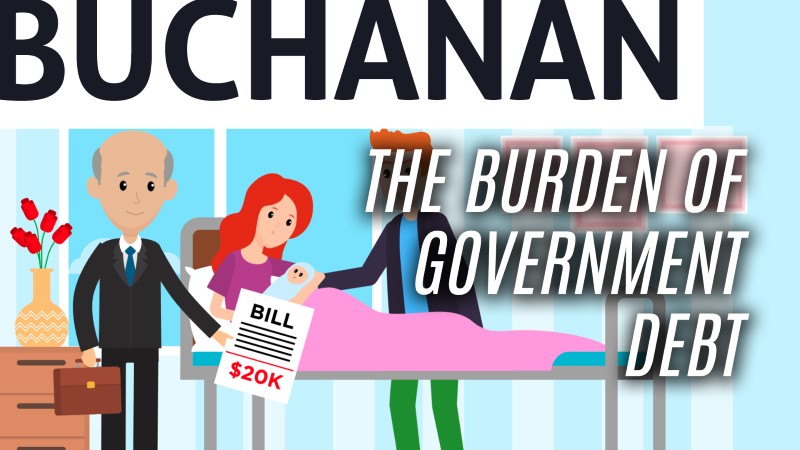
The Burden of Government Debt
Download the Book
Get a digital copy of the book. Choose the version you prefer below.
Explore the Book
Chapter by chapter summary of the book.
-

Chapter 1
The “Organismic” versus the Individualistic Conception of Collective Choice
The great majority of the many comments, speeches, articles, and books that Buchanan wrote over the course of his long scholarly career is an outgrowth of the fundamental insights that he offered in 1949.
Most foundational among these 1949 insights is this: because neither the state nor society is a singular and sentient creature, a great deal of analytical and policy confusion is spawned by treating them as such. Collections of individuals cannot be fused or aggregated together into a super-individual about whom economists and political philosophers can usefully theorize in the same ways that they theorize about actual flesh-and-blood individuals. Two or more people might share a common interest and they might—indeed, often do—join forces to pursue that common interest. But two or more people are never akin to a single sentient individual. A collection of individuals, as such, has no preferences of the sort that are had by an actual individual. A collection of individuals, as such, experiences no gains or pains; it reaps no benefits and incurs no costs. A collection of individuals, as such, makes no choices.
-

Chapter 2
On the Burden of Government Debt
Until John Maynard Keynes published his General Theory of Employment, Interest, and Money in 1936, most economists—from Adam Smith in the mid-eighteenth century through economists in the early twentieth century—understood that the costs of government projects funded with debt are passed on to the future generations who, as citizen-taxpayers, must repay the debt. This understanding was rejected by the new orthodoxy and replaced with the insistence that projects funded with borrowed money are, just like projects funded with currently collected taxes, paid for at the time the projects are undertaken.
-

Chapter 3
The Individualistic Approach to Fiscal Policy
Economists often depict government as an omniscient organization that implements policies to maximize social welfare. But this depiction falls short in at least two ways. First, there is no such thing as “social welfare” beyond the welfare of each of the individuals who make up the society. Second, recognizing that government is not omniscient, there is no way for policy makers to know what policies would benefit those who are affected by them beyond discovering the preferences of its citizens as revealed by those citizens themselves.
-

Chapter 4
Subjective Costs
When someone makes a choice, that person incurs a cost in the form of the value, to him or her, of what he or she forgoes as a result of making that choice. Someone who spends $15 to go to a theater to watch a movie forgoes the opportunity to spend that $15 to go to a restaurant to have lunch. Costs are often summarized in monetary terms, which obscures the fact that the true cost is not giving up the money itself, but, rather, giving up what else could have been purchased with the money.
-

Chapter 5
Clubs and Externalities
An externality exists when the actions of some people impose costs or convey benefits to others not involved in those actions. One common example is smoke from a factory that pollutes the air that nearby individuals breathe. The typical remedy suggested by economists is to tax the externality-generating activity, or if that is not feasible, to impose a regulation that reduces the external cost—the cost that’s imposed on third parties.
-

Chapter 6
Ethics and Economics
Individuals have their own goals and desires, and the purpose of economic activity is to enable them to cooperate with each other so they can further those goals. As economists depict it, individuals have “utility functions” and they make choices that enable them to maximize their utility. What this means in more common language is that individuals have their own goals, which each individual understands better than does anyone else. And the subject of economics, as Buchanan saw it, is to analyze how individuals interact for their mutual benefit in furtherance of those goals.
-

Chapter 7
Politics, Science, and Subjectivism
A major difference between the social sciences and the physical sciences is that the objects of study in the physical sciences behave exactly as prescribed by the laws of nature. The challenge in the natural sciences lies in discovering those laws. The social sciences face this same challenge—there are indeed laws of social behaviour, such as the law of demand. But in the social sciences there’s an additional challenge: Its subjects—human beings—make choices about how they will behave. Predictions in the social sciences, therefore, can never be as precise, or as replicable, as predictions in the physical sciences.
-

Chapter 8
Politics as Exchange
Individuals engage in market exchange because it is mutually advantageous for them to do so. They voluntarily agree to trade because all parties to each exchange view it as a way for each party to further his or her own individual interest. The most familiar kind of market exchange is the simple “two-party” exchange: you give me some fish in exchange for some of my bananas. But much exchange involves many individuals, each still seeking his or her own gain, consciously organizing together to pool their resources and efforts. Thus, individuals often work together through collective organizations to carry out those mutually advantageous activities. Some organizations, such as clubs and firms, are voluntary, but other kinds of collective action are taken through government. When government is used ideally, people exchange with each other politically in order to accomplish ends that they could not accomplish individually or through market exchange.
-

Chapter 9
Constitutional Economics
Buchanan observed that economic analysis, for the most part, examines the choices people make subject to given rules. Constitutional economics, in contrast, examines the choice of rules themselves. Buchanan calls decisions on what those rules should be “constitutional decisions,” while decisions that people make within some set of rules are called “post-constitutional decisions.” Using a sports analogy, Buchanan likens constitutional rules to the rules of the game, and post-constitutional decisions to those that are made within the rules of the game. Constitutional decisions are the decisions that determine the rules under which the game is played.
-

Chapter 10
What Should Economists Do— and Not Do?
James Buchanan devoted his presidential address to the Southern Economic Association to answering the question “What should economists do?”—also the title of his talk. To non-economists, this question probably seems silly, or at least surprising. Don’t professional economists already know what they should do? And isn’t the answer obvious—namely, study the economy?
Well, yes, of course. But what, exactly, is the economy? “The economy” is a familiar enough phrase, regularly used by economists and non-economists alike. But the very familiarity of the phrase likely inhibits those who hear it from thinking deeply about just what it refers to, and hence, about what exactly it is economists should study. Buchanan argued that economists had become seriously misled by their failure to think carefully about just what the economy is and what it does.
About the Author
Donald J. Boudreaux
Donald J. Boudreaux is Professor of Economics at George Mason University, Senior Fellow with the F.A. Hayek Program for Advanced Study in Philosophy, Politics, and Economics at the Mercatus Center at George Mason University, and a Senior Fellow with the Fraser Institute. He is also holds the Martha and Nelson Getchell Chair for the Study of Free Market Capitalism at the Mercatus Center. He is the author of The Essential Hayek, and he blogs at cafehayek.com.
Randall G. Holcombe
Randall G. Holcombe is DeVoe Moore Professor of Economics at Florida State University. He received his Ph.D. in economics from Virginia Tech, and taught at Texas A&M University and at Auburn University prior to coming to Florida State in 1988. Prof. Holcombe is also Senior Fellow at the James Madison Institute, a Tallahassee-based think tank that specializes in issues facing state governments, and is Senior Fellow at the Independent Institute in Oakland, California. He served on Florida Governor Jeb Bush’s Council of Economic Advisors from 2000 to 2006, and is past president of the Public Choice Society and the Society for the Development of Austrian Economics. Prof. Holcombe is the author of twenty books and more than 200 articles published in academic and professional journals. His books include Political Capitalism: How Economic and Political Power Is Made and Maintained (2018) and Coordination, Cooperation, and Control: The Evolution of Economic and Political Power (2020).
Additional Resources
The oldest of nine children, John Stuart Mill was born on May 20, 1806; he died in France, where he spent many of his later years, on May 7, 1873.
Mill had a very extraordinary, strenuous education, overseen by his ambitious father James, who believed that one becomes improved via education and, once educated, that is the end of the matter. John Mill was reading Greek at age three and Latin at the age of eight. He was at heart always reform-minded, however, and his more mature views allowed that people might come to realize how best to reform, remake, and improve themselves. In fact, reform-mindedness is a major theme in Mill’s life. Among the many liberal causes associated with him are the defense of the abolition of slavery, repeal of the Corn Laws, extension of the franchise and property rights to women, reform of Irish property arrangements, and the question of birth control.
In the summer of 1830, Mill met and fell headlong in love with the already married Harriet Taylor and began an intense and prolonged relationship with her. The repercussions of his friendship with and eventual marriage to Harriet were profound—and costly—and included isolation from family and friends. The experience formed the backdrop to his strong denunciation in On Liberty of the oppression associated with public opinion.
Harriet’s influence on Mill’s work was significant. Beginning in 1846 in a newspaper article and then recurring frequently thereafter, Mill attributed much of his work as a “joint production” with Taylor. In 1861, Mill completed one of his and Harriet’s most influential works, The Subjection of Women, on which he had collaborated closely with Harriet until her sudden death in 1858. Published in 1869, it was filled with many ideas ahead of their time.
In 1865, well after Harriet’s death, Mill became a member of Parliament. By that point, he had gained a great deal of fame as a logician, philosopher, and political economist. Mill’s time in Parliament was relatively brief but his influence did not dwindle in retirement. He spent many of his remaining years in France, living in Avignon until his death in 1873.
Listen In
J.S. Mill—Part 1: The moral, the political, and the economic
In this installment of the Essential Scholars podcast, host Rosemarie Fike is joined by Dr. Sandra Peart of the University of Richmond to discuss John Stuart Mill’s life, influence in the field of moral philosophy and economics, and how his experiences during the early half of the industrial revolution shaped his thinking. In the next episode, we'll explore why Mill's ideas are still relevant in today's modern world.
- Follow or Subscribe:
J.S. Mill—Part 2: Imagining a world with more than the basics
In this installment of the Essential Scholars podcast, host Rosemarie Fike and Dr. Sandra Peart of the University of Richmond discuss John Stuart Mill’s ongoing contributions in economics and philosophy, and how his vision of a world where people have access to more than the bare minimum basic necessities of life—or “lower pleasures”—is a vision we should all share.
- Follow or Subscribe:
Watch the Videos
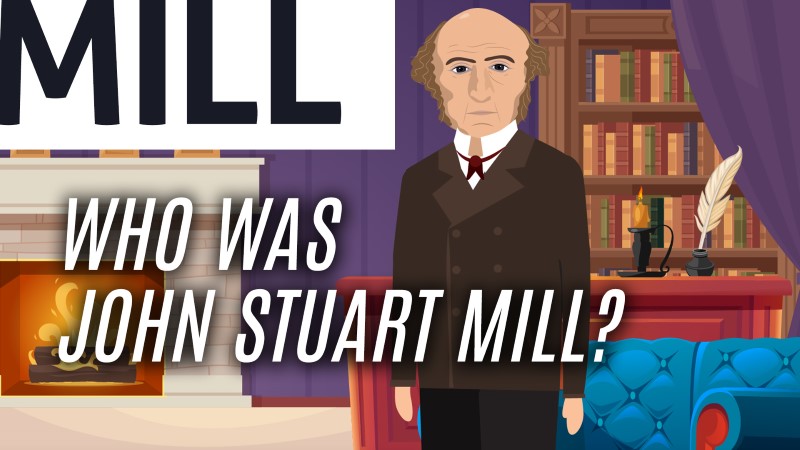
Who was John Stuart Mill?

The Benefits of Individualism and Choice

The No-Harm Principle
Against Government Paternalism
Feminism
Capitalism, Competition, and Choice
Download the Book
Get a digital copy of the book. Choose the version you prefer below.
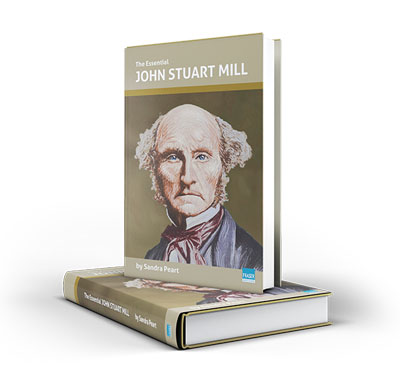
Explore the Book
Chapter by chapter summary of the book.
-
Chapter 1
Liberty: Why, for Whom, and How Much?
Mill’s 1869 On Liberty made the case for three forms of freedom: thought, conscience, and expression; tastes, pursuits, and plans; and to join other like-minded individuals for a common purpose. Why did he care so much about these freedoms? He believed that self-governance—freedom—was an essential part of human happiness, how “human life… becomes rich, diversified, and animating”. Liberty holds a special place Mill’s overall conception of happiness, serving both as a means to obtaining individual and societal happiness, and also as an essential component of being human. Mill grounds his discussion of liberty on “utility,” “the permanent interests of man as a progressive being”.
-

Chapter 2
Freedom of Expression: Learning, Bias, and Tolerance
For Mill, the important lesson on speech is that, like choice itself, speech is a learning device, a way that people become better choosers (especially in the case of political choice), more tolerant, and more learned. Unlike thoughts and beliefs that are unexpressed in public, speech is for the most part a social act. This publicness is useful, in Mill’s mind: By speaking our arguments aloud, we learn to understand our own words and we see how others receive them. Via speech, we learn to understand, and—Mill hoped—tolerate each other. For Mill, this was particularly important in the coming age of democracy. Since speech is a social act, it influences others. That influence comes with a responsibility: those in authority, such as politicians or professors, have a responsibility to speak truthfully and listen to counterarguments. Speech thus comes with potential limitations and restrictions that attempt to balance potential harms against the benefits associated with speech.
-

Chapter 3
Utilitarianism: Happiness, Pleasure, and Public Policy
Here, we consider how Mill’s Utilitarianism was grounded in a theory of morals in which the worth and capacity of each was equal to that of others and all individuals are connected via sympathy and the desire for approbation. From this ethical theory, Mill recommended sweeping institutional reforms to offer equal treatment to all while continuing to advocate more individual choice.
Mill’s Utilitarianism relied on several key principles. For individual actions, Mill held that “actions are right in proportion as they tend to promote happiness, wrong as they tend to produce the reverse of happiness”.
-
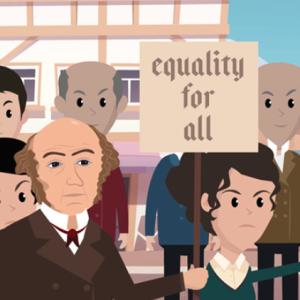
Chapter 4
Mill’s Feminism: Marriage, Property, and the Labour Market
Here, we examine Mill’s views on “the woman problem,” as commentators called it in the nineteenth century. We will see that Mill was a thoroughgoing feminist before the emergence of a feminist movement. Long before it was fashionable to do so, he advocated for equal labour market and educational opportunities for women. As part and parcel of his utilitarian presumption that people be treated equally under the law, Mill advocated for women to obtain the legal right to leave marriages and the ability to own property outside of marriage.
-

Chapter 5
Production and Distribution
In his 1848 edition of the Principles of Political Economy and in all editions that followed, Mill famously distinguished between the laws of production, subject to technological and knowledge constraints, and those of distribution, a matter of human design. Perhaps more than any other claim in Mill’s corpus, this famous distinction has caused a great deal of confusion and consternation.
-

Chapter 6
Mill on Property
Mill’s chapters on property in the Principles of Political Economy begin with his observations on property arrangements in mid-nineteenth century Britain. As he saw it, private property—and here, for the most part, he had in mind property in land—was not justified by natural law or utilitarian principles but rather had emerged over the course of time as a means to minimize conflict.
-

Chapter 7
Mill on Socialism, Capitalism, and Competition
Although Mill insisted that production and distribution are in fact interrelated, we should not conclude that he favoured only market-determined outcomes without regard for other, freely chosen institutional arrangements. Indeed, much of Mill’s Principles of Political Economy is devoted to the review of potential costs and benefits associated with socialism, peasant proprietorship, and trade unions. In this chapter, we examine Mill’s main arguments as they relate to alternative economic arrangements. While he was open to different institutional arrangements, Mill strongly opposed a centrally directed imposition of goals.
-

Chapter 8
Mill’s Considerations on Representative Government
Mill was both reform-minded in principle and active in a significant number of reform proposals. As a member of Parliament during the Governor Eyre controversy in Jamaica and the Fenian rebellion in Ireland, his tenure overlapped several key incidents related to self-governance of former slaves and dependent Irish people.
-
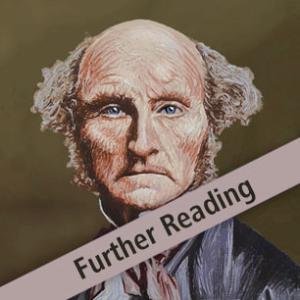
Chapter 9
Mill’s Harm Principle: A Study in the Application of On Liberty
English philosopher and political economist John Stuart Mill argued that people learn by choosing: this is how they become creative and productive individuals. For this reason, and because he felt that individuals are typically the most capable people to make their own choices, Mill was highly skeptical of restrictions on choice placed by a third party, such as the state. While the cases Mill uses in On Liberty clearly pertain to nineteenth century concerns and thus seem dated, his blueprint for how we think about and possibly intervene over potential harms nevertheless sheds light on contemporary issues, such as: gun control, free speech, and even mandates during the COVID-19 pandemic.
About the Author
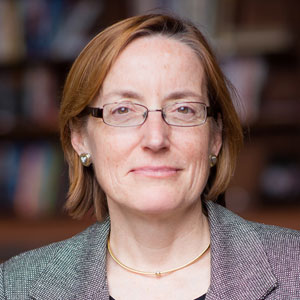
Sandra J. Peart
Sandra J. Peart, Ph.D., Senior Fellow at the Fraser Institute, became the fourth dean of the Jepson School of Leadership Studies in August 2007. In 2018, she was appointed to the E. Claiborne Robins Distinguished Professorship in Leadership Studies. She is past president of the International Adam Smith Society and the History of Economics Society and has written or edited ten books, including most recently, Towards an Economics of Natural Equals: A Documentary History of the Early Virginia School of Political Economy, from Cambridge University Press (2020). She is the author of more than 100 articles in the areas of constitutional political economy, leadership in experimental settings, ethics and economics, and the transition to modern economic thought. Her popular articles on leadership, ethics, higher education, and economic themes have appeared in The New York Times, The Chronicle of Higher Education, USA Today, and the Washington Post.
Peart’s research focuses on the role and responsibilities of experts in society. She examines these questions as a historian of economic thought with a particular interest in the economics of Adam Smith and John Stuart Mill.
Peart obtained her doctorate in economics from the University of Toronto. She is an elected member of the Mont Pelerin Society, the Royal Society for the Encouragement of Arts, Manufactures and Commerce, and the Reform Club.
Additional Resources
David Hume (1711–1776) is a towering and intriguing figure. He was the preeminent philosopher in what is now called the Scottish Enlightenment, a time that was “crowded with genius” and in a place regarded as the rebirth of the golden era of Athens. His writing displayed an astonishing range, addressing everything from metaphysics to politics, and in subject after subject he produced fresh, novel, and brilliant insights.
Hume was born in 1711 in Edinburgh, Scotland. His father died when Hume was only two years old, and he was raised by his mother, Katherine, an advocate (or lawyer). Hume matriculated at the University of Edinburgh at the tender age of 10, pursuing the then-standard course of study of Greek, Latin, metaphysics, and “natural philosophy” or natural science. Until he was 22, he engaged in independent study, reading widely in history, literature, philosophy, law, and theology.
Hume wanted to devote himself to reading and writing literature and philosophy. His resources were “very slender,” however, so he traveled to France and resolved to live as frugally as possible so that he could maintain his independence and dedicate his life to “the improvement of my talents in literature.” During his time there, and by this time in his late twenties, he wrote what is now considered one of the great texts in Western philosophy, his Treatise of Human Nature, which was published in two parts in 1739 and in 1740. The Treatise offered an account of human psychology, of causation and the limits of human knowledge, and of the origins and nature of moral judgments. He went on to produce penetrating insights on topics in political economy such as debt, interest, trade, and the origins and limits of political obedience, along with insights on many other areas ranging from aesthetics to religion. This book focuses on a handful of his central contributions with an emphasis on political economy, in particular his conception and defense of commercial society and of the role government should play in protecting it.
To his regret, Hume never married and had no children, and he was twice denied university professorships because of his religious “scepticism.” He included among his friends Adam Smith and many other luminaries of his time, but it was and is through his writings that his brilliance, his insight, his wit, his curiosity, and his joy emanate.
Listen In
David Hume Part 1: The Good, the Bad, and the Governmental
Dr. James Otteson, John T. Ryan Jr. Professor of Business Ethics at the University of Notre Dame and author of the Essential David Hume, joins host Rosemarie Fike to discuss Scottish philosopher and economist David Hume’s perspective on human nature—and why he viewed specifically government as an oft-misused vehicle for a select few to extract resources at the expense of others.
- Follow or Subscribe:
David Hume Part 2: With Prosperity for All
Dr.James R. Otteson, Professor of Business Ethics at the University of Notre Dame and author of The Essential David Hume, joins host Rosemarie Fike once again to discuss Hume’s perennial insights on how free trade can serve as a vehicle for global prosperity and the building blocks of a commercial society, while government debt can hinder a country’s sovereignty.
- Follow or Subscribe:
Watch the Videos
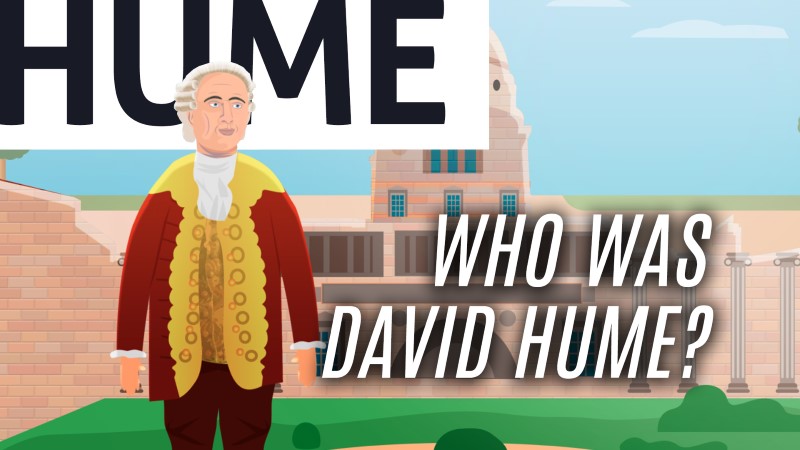
Who Was David Hume?

Commercial Society

The Benefits of Free Trade

Public Debt
The Social Contract & The Origins of Government

Resolving Scarcity and Conflict
Download the Book
Get a digital copy of the book. Choose the version you prefer below.
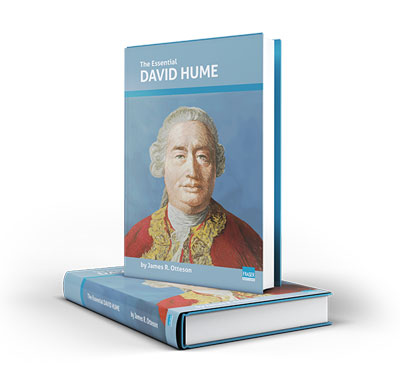
Explore the Book
Chapter by chapter summary of the book.
-
Chapter 1
Who was David Hume?
David Hume was born in 1711 in Edinburgh, Scotland. He was the third and final child of Joseph and Katherine Home. (Hume changed the spelling of his last name from “Home” to “Hume” in 1734 so that its spelling matched its pronunciation.) His father died when Hume was only two years old, and Hume was raised by his mother, Katherine, who never remarried. Katherine was the daughter of Sir David Falconer, a prominent judge in Scotland, and was herself an advocate (or lawyer). It was perhaps understandable, then, that Hume’s mother expected him to follow a similar path and also become an advocate.
-

Chapter 2
Empiricism
Hume’s philosophical methodology can be described as “empiricism.” Unlike many philosophers before Hume and since, he was skeptical that we could learn about the world by merely thinking about it. We needed to observe it. We must run experiments; we must gather and assess data; we must measure and quantify. We make tentative hypotheses, and then test them against further observations. For Hume, this holds as much for physical sciences—how things move in the world, how chemicals interact, what materials should be used and how they should be configured to build bridges—as it did for the human sciences—how medicines affect us, how our passions motivate us, how our beliefs are formed, where our moral sentiments come from, what governments do or should do, where wealth comes from.
-

Chapter 3
Justice, Conflict, and Scarcity
Hume applied his empirical “experimental method” not just to the natural sciences, however, but to the “science of man” as well—which includes morality and politics, or what we might call political economy. How might Hume’s experimental method apply to, for example, justice? Hume argued that, as with other virtues, we come to have a sense or conception of justice based on our experiences. In that way, justice is, according to Hume, an “artificial” virtue, not a “natural” one—that is, it is constructed by human beings in light of their experiences, not written into the fabric of the universe or deduced from uncontradictable premises.
-

Chapter 4
The Origins of Government and the Social Contract
Hume offers two accounts of the origins of government. One account, which appears in his early Treatise of Human Nature, explores why a government would be necessary and what proper purpose it would serve. The other account appears in several of his later essays, in which he explores the historical development of actual governments. The former outlines what government should do, whereas the latter account focuses on what they actually do. As one might expect, the latter departs rather significantly from the former. But Hume’s purpose in giving these two accounts was, first, to help us see clearly what the nature of government is and, second, give us some potential guideposts for reform.
-

Chapter 5
Commercial Society
Hume was one of the earliest expositors and defenders of commercial society. In a series of essays, he showed that, when secured in their lives and property, people would trade, transact, exchange, partner, and associate with one another in mutually voluntary and mutually beneficial ways, generating benefit not only for them as individuals but also for their fellow citizens, for their country, and even for others in the world.
-

Chapter 6
Trade, Money, and Debt
Hume’s support for markets, trade, and commerce were almost unqualified, and he made these arguments before Adam Smith published The Wealth of Nations. But Hume also made groundbreaking contributions to our understanding of economic policy matters like the balance of trade, the role of money and the use of currency, the role of prices, the role of interest, and public credit.
-

Chapter 7
Virtue, Religion, and the End of Life
Hume did not believe that all preferences and desires are good. In fact, he drew clear distinctions between virtues, on the one hand, and vices, on the other. He went so far as to claim that people “who have denied the reality of moral distinctions”—that is, people who claim a moral equality among all preferences and desires, thereby eliminating any moral distinction among them—“may be ranked among the disingenuous disputants,” because, he claimed, no one “could ever seriously believe, that all characters and actions were alike entitled to the affection and regard of everyone”. The question for Hume, then, was not whether there are moral virtues and moral vices, but, instead, how we discern them and what their origin is—and what institutions support and encourage them.
-

Chapter 8
Happiness, Friendship, and Tragedy
Can a philosopher be happy? Hume had a lot to say about happiness throughout his writings. He also appears to have been one of the few great philosophers in history—indeed, perhaps the only one—who was both joyful and would have been a joy to be friends with. He was beloved by virtually everyone he met, and though many disliked his ideas—in particular his religious skepticism—it appears that everyone who met or spent time with him enjoyed the experience. Hume was witty, sharp, incisive, and provocative without being belligerent. He was an excellent conversationalist, was frequently invited to attend dinner parties throughout his adult life, and was widely sought-after as an acquaintance and guest. Even those who objected to his alleged irreligiosity admitted that it was hard to hate him as a person, even if you hated his ideas.
About the Author

James R. Otteson
James R. Otteson, Senior Fellow at the Fraser Institute, is John T. Ryan Jr. Professor of Business Ethics and Faculty Director of the Business Honors Program in the Mendoza College of Business at the University of Notre Dame, and a Senior Scholar at The Fund for American Studies. He received his BA from the Program of Liberal Studies at the University of Notre Dame and his PhD in philosophy from the University of Chicago. He specializes in business ethics, political economy, the history of economic thought, and eighteenth-century moral philosophy. He has taught previously at Wake Forest University, New York University, Yeshiva University, Georgetown University, and the University of Alabama. Prof. Otteson’s books include Adam Smith’s Marketplace of Life (Cambridge, 2002), Actual Ethics (Cambridge, 2006), Adam Smith (Bloomsbury, 2013), The End of Socialism (Cambridge, 2014), The Essential Adam Smith (Fraser Institute, 2018), and Honorable Business: A Framework for Business in a Just and Humane Society (Oxford, 2019). His latest books include Seven Deadly Economic Sins (Cambridge, 2021); and Should Wealth Be Redistributed? A Debate (with Steven McMullen; Routledge, 2022).
Additional Resources
The origin of the Austrian School of economics is the publication of Carl Menger’s Principles of Economics in 1871. Menger, William Stanley Jevons, and Léon Walras are considered the co-founders of the “marginal revolution” in economics, a shift to the marginal utility theory of value from the labour theory of value. The revolutionists argued that value is not based on the amount of labour expended but reflects how useful people perceive the commodity to be in satisfying their ends.
This revolution had radical implications for the way economists understood the world: consumer valuations, and not the amount of effort, is what determines prices. But what determines consumer valuations? This question had long perplexed social scientists. Why do consumers value diamonds, a luxury item, more than water, an essential for life? By introducing the concept of marginal utility, Menger and his co-revolutionaries were able to resolve this paradox.
The labour theory of value, however, was not Menger’s only target in his Principles. He was also engaging the German Historical School, which held that economic science is incapable of producing universal principles. In contrast, Menger, using marginal utility analysis as a foundation, argued that universal economic laws do apply across time and geographic space. Those in the German Historical School took issue with the claims by Menger and his colleagues about the possibility of universal theory and labeled them the “Austrian School” because they taught at the University of Vienna.
Subsequent generations of scholars have developed the insights of the Austrian School. The purpose of this book is to present an overview of the key tenets of Austrian economics by synthesizing the insights from these thinkers in a set of eight topics that capture the core elements of Austrian economics.
Listen In
Austrians Economics Part 1: The Little Things that Keep the World Turning
Christopher J. Coyne, Professor of Economics at George Mason University and co-author of The Essential Austrian Economics, joins host Rosemarie Fike to discuss the contributions to economic thinking and systems made by the Austrian School, including how our quality of life is in large part thanks to countless interactions occurring within the market that allow everyday people access to the things we need to sustain us.
- Follow or Subscribe:
Austrian Economics Part 2: Government Intervention and the Assumption of Power
Christopher J. Coyne, Professor of Economics at George Mason University and co-author of The Essential Austrian Economics, returns to the podcast to join host Rosemarie Fike in a discussion about why the Austrian School’s way of thinking about politics, social change, and governmental power is as relevant today as ever—specifically, how advocating for expansion of state power may be intended as a vehicle for good but when leadership changes, so do the government’s priorities.
- Follow or Subscribe:
Watch the Videos
What is Austrian Economics?
Marginal Thinking
Economic Calculation
Interventionism
Business Cycles
The Market Process
Download the Book
Get a digital copy of the book. Choose the version you prefer below.
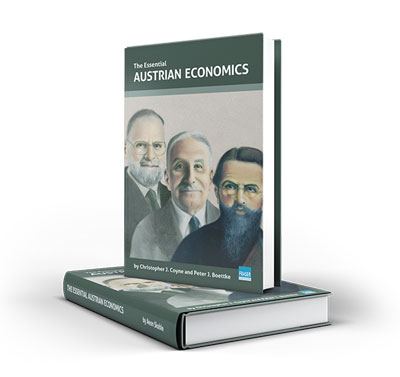
Explore the Book
Chapter by chapter summary of the book.
-
Chapter 1
The History of Austrian Economics and Marginal Thinking
The origin of the Austrian School of economics is the publication of Carl Menger’s Principles of Economics in 1871. Menger, based in Austria, along with William Stanley Jevons in England, and Léon Walras in Switzerland, are considered the co-founders of the “marginal revolution” in economics. The marginal revolution was a paradigm shift from the established labour theory of value to the marginal utility theory of value. The labour theory of value held that the value of a commodity is a function of the labour required to produce the item. The marginal revolutionists, in contrast, argued that value is not based on the amount of labour expended, but rather reflects how useful people perceive the commodity to be in satisfying their ends.
-

Chapter 2
Methodological Principles
In recasting economics along the lines of marginal utility analysis, Carl Menger provided a unique set of methodological principles that are at the foundation of what makes Austrian economics distinct. These principles are grounded in the core purpose of economics, which is the intelligibility of the world in which we live. Further, since their goal is to understand the human world, economists must render the events under examination intelligible in terms of purposeful human action. This leads to the recognition that only individuals face decisions and make choices, though undoubtedly conditioned by their social surroundings. Therefore, social phenomena are only rendered intelligible if the economist traces those phenomena back to individual decisions. This is the concept of “methodological individualism,” which holds that people, with their unique purposes and plans, are the beginning of all economics analysis.
-

Chapter 3
Economic Calculation
Several years ago, Thomas Thwaites, an inventor, undertook the “Toaster Project” in which he attempted to build a simple electric toaster from scratch. To begin, he purchased the cheapest toaster available at a local store. He then deconstructed the toaster to understand the parts that he would need to build his own. Thwaites identified over 400 parts and realized that building the toaster required copper, iron, nickel, mica, and plastic, among other materials. He began by going to mines to obtain the necessary raw materials. After extensive travel and effort, he acquired the necessary resources to construct his toaster. He then shaped these materials into the various components for the toaster and created a plastic mold for the toaster body. Upon plugging the completed (and very ugly!) toaster into an electrical outlet, it shorted out in a matter of seconds. The Toaster Project illustrates the marvel of coordination that takes place to produce goods that most of us take for granted. How does this marvel operate? We will be exploring the answer to this question over the next several chapters. Here we begin with the concept of economic calculation.
-

Chapter 4
Capital and the Structure of Production
Producing the toaster discussed at the beginning of the previous chapter involved the combination of over 400 inputs. As the Toaster Project illustrated, this involves significant coordination across both time and geographic space. In the previous chapter, we discussed the role that economic calculation plays in coordinating people’s economic activity. This chapter builds on that foundation by exploring the unique nature of inputs, or capital goods, necessary to produce final consumer goods. Beginning with Carl Menger’s work in 1871, Austrian economists have emphasized the unique characteristics of capital, which refers to goods that are valued because of their contribution to producing subsequent consumer goods.
-

Chapter 5
The Market Process
What is a market? There is a tendency for people to think of markets as if they are choosing entities that determine the allocation and distribution of resources. “The market,” we often hear, is responsible for the decline of certain industries, the loss of jobs, or inequality in the distribution of income, and so on. This framing neglects the reality that markets reflect the choices of individuals participating in exchange relationships with others. The market is not a place or thing and has no purpose and no ability to engage in choice. Instead, market outcomes reflect the purposes, plans, and choices of the numerous people (demanders and suppliers) who voluntarily choose to interact with others. Given this, a more accurate way to think about markets is as an array of overlapping, continually changing, voluntary interactions among people, each of whom is seeking to achieve his or her own unique goals. These interactions among individuals contribute to the emergence of a pattern of resource allocations and distributions.
-

Chapter 6
Spontaneous Order
Overnight, snow falls on a college campus. As students make their way to class the next morning, they seek the shortest path possible to avoid getting wet and cold. The first student cuts across the grass, leaving a set of footprints in the snow. A second student follows the first, taking advantage of flattened snow left by the first student. As subsequent students follow suit, a well-defined path quickly appears. This is an example of a spontaneous order, an outcome that is the result of purposive action but not design. No single person or group of people consciously planned the path, yet the path appeared as each person pursued the goal of getting to class in a way that minimized their chances of getting wet and cold. The idea of spontaneous order is one of the most important concepts in the social sciences and is prevalent throughout the work of Austrian economists.
-

Chapter 7
Interventionism
Well-intentioned government policymakers seek to help low-income families purchase milk. In order to make cow’s milk more affordable, the policymakers impose a price ceiling. A price ceiling is a government mandate on the maximum monetary price that can be legally charged for a product.
Milk producers, however, are not passive in the wake of the government’s price decree. They adjust their behaviour to the price ceiling by holding some milk off the market until the price is allowed to again rise above the price established by the ceiling. This reduces the supply of milk available to consumers, including those less well off who were the intended beneficiaries of the initial government price control. That’s not all. In the face of the reduced supply of milk, consumers shift to milk substitutes—like soy milk and almond milk—and this leads to an increase in the price of these goods, making them less affordable to the least well-off in society.
-

Chapter 8
Business Cycles
F.A. Hayek earned two doctorates from the University of Vienna (1921 and 1923). After his university studies, Hayek was introduced to Ludwig von Mises through his teacher, Friedrich von Wieser, and their collaboration began. For five years, Hayek worked under Mises at a government office and then, in 1927, they co-founded the Austrian Institute for Business Cycle Research, where their work resulted in the Mises-Hayek theory of the trade cycle.
-

Chapter 9
Planning and the Power Problem
As discussed in earlier chapters, government policymakers suffer from the problem of insufficient knowledge in their efforts to plan economic activity. Knowledge is dispersed throughout society and much of this knowledge is tacit, meaning it cannot be communicated, aggregated, or possessed by a single policymaker or group of policymakers. This knowledge problem applies both to efforts at comprehensive economic planning—that is, planning all economic activity—and to efforts at non-comprehensive planning—that is, piecemeal efforts at planning aspects of economic activity. The market process attenuates this knowledge problem as entrepreneurs, relying on market-determined prices and profit and loss as guideposts, discover the best use of scarce resources. The inability of government planners to acquire the necessary economic knowledge, combined with the fact that people adjust their behaviour to interventions, also means that efforts to plan economic activity will lead to a series of unintended consequences, as illustrated by the example of the price control of cow’s milk at the beginning of chapter 7. Beyond the knowledge problem, there is another issue with the government planning of economic activity: it tends to centralize discretionary power in the hands of a small group of policymakers.
-
Chapter 10
Austrian Economics Yesterday and Today
The Austrian School of economics has a long and distinguished history. Members of this school have been awarded the Nobel Prize in Economic Science, recognized as Distinguished Fellows of the American Economic Association, elected to the British Academy, served as President of the major scientific associations in economics, edited the major academic journals, and taught at some of the most prestigious universities in the world. Beyond this rich history, the central elements of the Austrian School have contemporary relevance for economic understanding and for public policy.
About the Author

Christopher J. Coyne
Christopher J. Coyne is a Professor of Economics at George Mason University, the Associate Director of the F.A. Hayek Program for Advanced Study in Philosophy, Politics, and Economics at the Mercatus Center, and F.A. Harper Professor of Economics at the Mercatus Center. He received his Ph.D. from George Mason University. He is the co-editor of The Review of Austrian Economics and The Independent Review, and the author or co-author of Tyranny Comes Home: The Domestic Fate of U.S. Militarism; Doing Bad by Doing Good: Why Humanitarian Action Fails; Media, Development and Institutional Change; and After War: The Political Economy of Exporting Democracy. He is also the co-editor of In All Fairness: Liberty, Equality, and the Quest for Human Dignity; Exploring the Political Economy and Social Philosophy of James M. Buchanan; Interdisciplinary Studies of the Market Order: New Applications of Market Process Theory; Future: Economic Peril or Prosperity?; The Oxford Handbook of Austrian Economics; and The Handbook on the Political Economy of War. He has written numerous academic articles, book chapters, and policy studies.

Peter J. Boettke
Peter J. Boettke is a Professor of Economics and Philosophy at George Mason University, the director of the F.A. Hayek Program for Advanced Study in Philosophy, Politics, and Economics, and BB&T Professor for the Study of Capitalism at the Mercatus Center. He received his Ph.D. from George Mason University. Prof. Boettke has developed a robust research program that expands an understanding of how individuals acting through the extended market order can promote freedom and prosperity for society, and how the institutional arrangements shape, reinforce, or inhibit the individual choices that lead to sustained economic development. His most recently published books include F. A. Hayek: Economics, Political Economy and Social Philosophy; and The Four Pillars of Economic Understanding. Prof. Boettke is the editor of numerous academic journals, including the Review of Austrian Economics, and the Journal of Economic Behavior & Organization, and of the book series, Cambridge Studies in Economics, Choice, and Society. He has served as President of the Southern Economic Association, the Mont Pelerin Society, the Association of Private Enterprise Education, and the Society for the Development of Austrian Economics.
Additional Resources
Robert Nozick was a professor of philosophy at Harvard University who is most famous for his contributions to political philosophy. His 1974 book Anarchy, State, and Utopia helped establish the classical liberal or libertarian perspective as a viable alternative to redistributive egalitarian liberalism and to socialism. Despite many philosophers’ disagreements with Nozick’s arguments, those arguments could not be ignored.
Robert Nozick was born in Brooklyn, New York, in 1938, and received his undergraduate degree at Columbia University in 1959. At Columbia he was active in socialist politics, but during his time there and in graduate school at Princeton University, he was exposed to a variety of political perspectives, and he notes in the preface to his most famous book, Anarchy, State, and Utopia, that it was discussions with friends that “led me to take libertarian views seriously enough to want to refute them, and so to pursue the subject further.” This included ideas such as individual rights, the need for limits on government, and the wealth-growing mechanisms of a free market system.
Nozick was a professor of philosophy at Harvard University for almost his entire career. When he was a student, libertarian ideas were being discussed in economics departments, and he mentions being exposed to thinkers such as Ludwig von Mises, Friedrich Hayek, Milton Friedman, and Murray Rothbard, whose economic liberalism overlapped political liberalism. Nozick’s work is thus philosophical, but richly informed by economics, and has played a critical role in securing a respectable place in academic discourse for the classical liberal perspective. Towards the end of a distinguished career as an academic during which he wrote a total of six books on a diverse range of subjects, Nozick was diagnosed with stomach cancer in 1994 and he passed away in 2002. Nozick’s last book, Invariances, was published in 2001. He had been a Fulbright Scholar at Oxford University, President of the American Philosophical Association, and was Pellegrino University Professor at Harvard, that university’s highest honour. Praise for Anarchy, State, and Utopia’s clear and accessible writing style crossed ideological lines, and it won the National Book Award in 1975. Agree or disagree, Anarchy, State, and Utopia makes thought-provoking arguments that cannot be simply waved away.
Listen In
Robert Nozick Part 1: Why People Exist for Their Own Sake and Purposes
Dr. Aeon J. Skoble, Professor of Philosophy at Bridgewater State University and author of The Essential Nozick, joins host Rosemarie Fike to talk about Nozick's somewhat unconventional rise to prominence in the field of philosophy, as well as discuss Nozick’s key insights on morality, individual rights, limited government and the free market.
- Follow or Subscribe:
Robert Nozick Part 2: An Examined Life
Dr. Aeon J. Skoble, Professor of Philosophy at Bridgewater State University and author of The Essential Nozick, once again joins host Rosemarie Fike to discuss Nozick's perennial philosophical insights and how they might be applied today, including personal autonomy, the inherent morality in limited government, and even what a future society based on these core principles could look like.
- Follow or Subscribe:
Watch the Videos

Who was Robert Nozick?

Income Inequality & the Role of Choice

Income Redistribution is Incompatible with Liberty

The Minimal State

Democracy Not Sufficient For Freedom

A Framework For Society
Download the Book
Get a digital copy of the book. Choose the version you prefer below.
Explore the Book
Chapter by chapter summary of the book.
-

Chapter 1
Theory of Rights
Nozick begins Anarchy, State, and Utopia with the claim “Individuals have rights, and there are things no person or group may do to them (without violating their rights)” (p. ix). Incautious critics sometimes take this to mean that Nozick simply assumes rights and then proceeds from there, but he does have an argument for rights. For better or worse, this doesn’t appear until the third chapter of the book, but it is there. He understands rights as “moral side constraints upon what we may do” (p. 33). If there were no other beings, we would be free to do whatever we wanted to do, constrained only by the laws of physics.
-

Chapter 2
The Minimal State
A robust theory of rights such as the one Nozick outlined poses a significant challenge to political philosophy. If people’s rights cannot be overridden, then most forms of government we’re familiar with lack moral legitimacy. This might imply the moral necessity of anarchism. While for some people, that sounds like a conclusion so obviously wrong it requires no answer, Nozick thinks it worth taking seriously. “The state” seems like it necessarily violates rights: rulers of various stripes lay down the law and force people to comply on pain of fine, imprisonment, or death. Some laws might map onto some people’s predispositions anyway, but the coercion is there nonetheless. For example, maybe I think it is prudent to wear a seat belt when driving and would do it even if there were no laws compelling it, but as it happens, there are laws compelling it, which means coercion is being deployed even if my choices are not in this instance coerced. I could not change my mind, and others who think differently are coerced already. And the state’s operations are financed coercively, via taxation. Since this, too, is coercive, individualist anarchists have a point which we cannot simply ignore: the state is coercive in its very nature, and this is morally problematic for anyone who takes rights seriously. So Nozick sees it as incumbent on himself to explain how some sort of state could be possible without violating people’s rights.
-

Chapter 3
Entitlement Theory
Having demonstrated in Part I of his book that the minimal state can be justified, Nozick set himself the task in Part II of showing that the minimal state “is the most that can be justified. Any state more extensive violates people’s rights” (p. 149). He turns first to arguments for more extensive state power that are based on a concept of distributive justice. He addresses this primarily by means of what he calls the “entitlement theory,” which also sets the stage for the application of his theory of rights to various other issues in political economy.
-

Chapter 4
How Liberty Upsets Patterns
In his development of the entitlement theory, Nozick had argued that just holdings do not come about because they fit a preconceived pattern, but because they are the result of people engaging in just processes. He then uses a clever and now very famous thought experiment to demonstrate why patterned, end-state conceptions of distributive justice are necessarily incompatible with individual freedom. This incompatibility turns out to reveal an internal incoherence in patterned theories. The thought experiment involves Wilt Chamberlain, a professional basketball player whose name, at the time of the book’s publication, would have been very familiar to readers. As I summarize the argument (pp. 160-164), feel free to mentally substitute the name of any well-known professional athlete today.
-

Chapter 5
Liberal and Socialist Conceptions of Distributive Justice
Nozick’s general critique of patterned theories of distributive justice leads him to a specific consideration of one of the most well-known and influential of such theories, John Rawls’ 1971 A Theory of Justice, the now-canonical argument for mitigated economic liberty and redistribution. Nozick begins by praising the book, which he calls “a powerful, deep, subtle, wide-ranging, systematic work in political and moral philosophy which has not seen its like since the writings of John Stuart Mill, if then” (p. 183). And he also notes its influence, already huge in 1974 when Anarchy, State, and Utopia was published, and larger today: “Political philosophers now must either work within Rawls’ theory or explain why not” (p. 183). This encomium does not seem like mere formal politeness towards a colleague, but rather as very genuine admiration. Nevertheless, Nozick then proceeds to explain why he rejects the Rawlsian framework.
-

Chapter 6
Redistribution and the Growth of the State
The discussion of redistributivist arguments leaves Nozick in a position of having demonstrated that while the minimal state can be justified over the objection of individualist anarchists, no more extensive state can be. But he anticipates objections that the minimal state would be “frail and insubstantial” (p. 276). He addresses this sort of objection with a thought-experiment about the growth of the state which reveals how the subtle expansion of government power inevitably leads to rights violations.
-

Chapter 7
A Framework for Utopia
Having demonstrated that the minimal state is justified but that only the minimal state is justified, Nozick also wants to show that the minimal state is morally inspiring, a positive good. He begins this discussion by considering what “utopia” might even mean. He says that it is “impossible simultaneously and continually to realize all social and political goods,” but that the idea is nonetheless worth investigating (p. 297). Why would it be impossible? Because everyone is different. “The world, or all those I can imagine, which I would most prefer to live in, will not be precisely the one you would choose” (p. 298). But underlying this problem, indeed what makes it a problem in the first place, is the idea that society consists of multiple people who have to have some way of living together. So utopia would have to be the best possible world that all could live in. The requirements of social living have to be reconciled with the fact of human pluralism and diversity.
About the Author

Aeon J. Skoble
Aeon J. Skoble is a Senior Fellow at the Fraser Institute and a professor of philosophy at Bridgewater State University in Massachusetts. Widely regarded for his innovative methods of teaching economic key concepts and the philosophy behind markets and voluntary exchange, Professor Skoble has frequently lectured and written for the US-based Institute for Humane Studies, Cato Institute, and the Foundation for Economic Education. He is the author of Deleting the State: An Argument about Government (Open Court, 2008), the editor of Reading Rasmussen and Den Uyl: Critical Essays on Norms of Liberty (Lexington Books, 2008), and co-editor of Political Philosophy: Essential Selections (Prentice-Hall, 1999) and Reality, Reason, and Rights (Lexington Books, 2011).
He is also the co-editor of The Simpsons and Philosophy and three other books on film and television. Skoble received a BA from the University of Pennsylvania, and his MA and PhD from Temple University.
Additional Resources
Essential Scholars is brought to you by

Fraser Institute
Institute for Economic Affairs
Institute of Public Affairs
Foundation for Economic Education
Acknowledgements
Made possible by generous grants from the Lotte and John Hecht Memorial Foundation, the John Templeton Foundation, and the Peter and Joanne Brown Foundation.